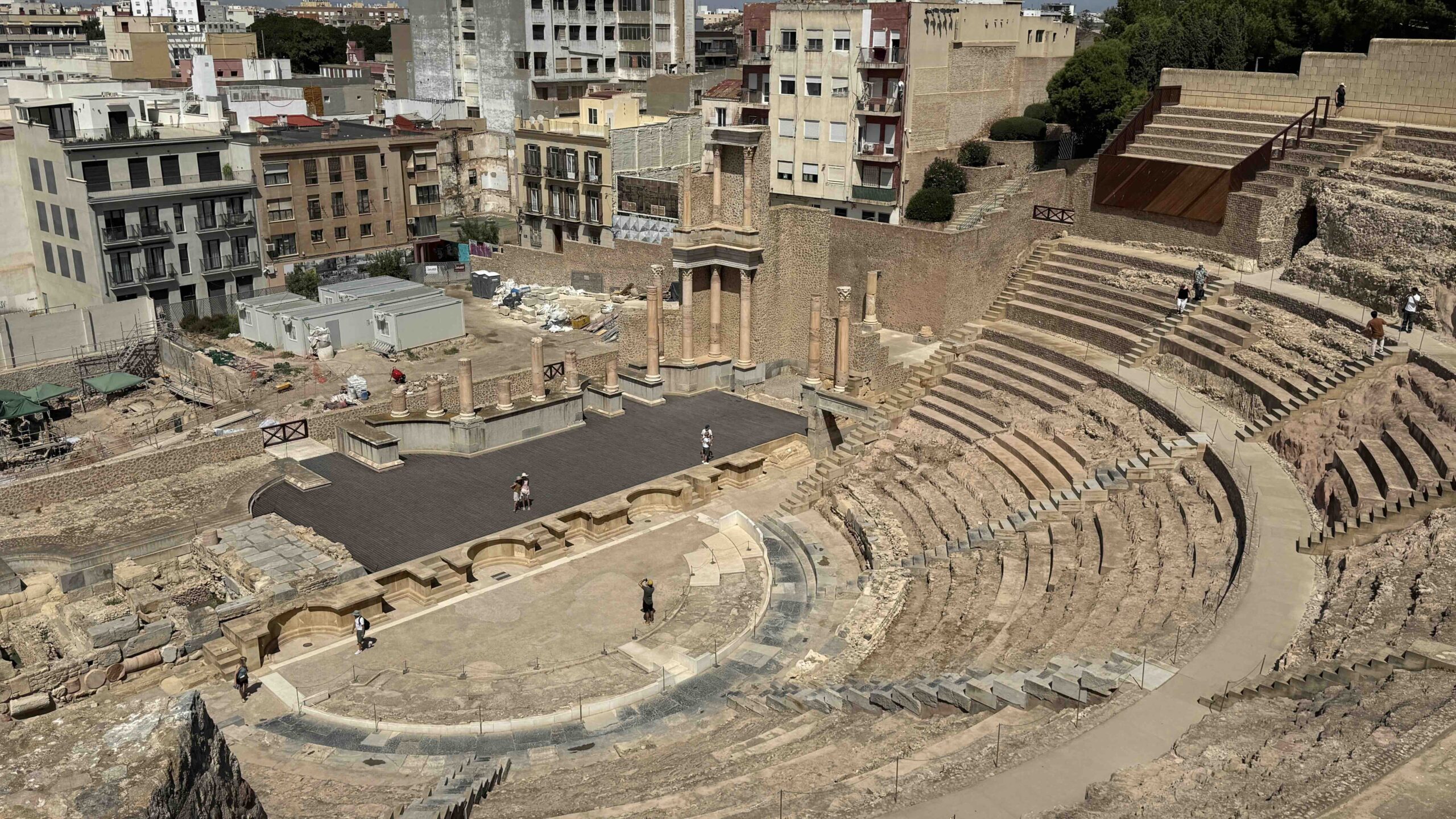
Hello my dear Readers, In today’s blog, I’d like to tell you about the main island of São Miguel, where we’re still moored with Symi in the marina. It’s been four weeks since I injured my shoulder; two sessions of physical therapy with a professional have helped less than the regular exercises and the passage of time. After a dislocation, you can expect 4–8 weeks of rehabilitation before the pain subsides. I’d say the pain has improved by about 50% at this point. I can handle light tasks again, and I can even drive a car. After we returned from the island of Horta to our boat in the marina, our friends Evelyn and Michael sailed over to join us. Not only did we explore the city together, but we also took road trips to the most important and beautiful places. A rental car here is ridiculously cheap compared to the U.S. Mid-size cars in good condition can be rented for about ten euros a day. So we set off and, after an hour, reached the western side of the island, whose landscape is dominated by the “Sete Cidades” volcano—which is wider than it is tall. About 22,000 years ago, violent eruptions blew out the center of this volcano, which had once stood 1,200 meters tall. After ash had settled inside the cooled, roughly 5-kilometer-wide caldera, forming a sealed layer, two lakes were formed. A village bearing the same name, “Sete Cidades,” lies on their shores. A visit to the crater lakes of this caldera, which are connected by a canal,

Another interesting place we visited there is an abandoned hotel on the crater rim. In the modern lingo of YouTubers and Instagrammers, it’s referred to as a “lost place.” The story dates back to 1989. At that time, a company planned to build a hotel with 88 beds, a conference center, a disco, a bar, and a restaurant, but unfortunately, it was far too ahead of its time, since tourism in the Azores was still in its infancy back then. The hotel closed after only 1.5 years due to low bookings and a lack of funds. Over the next 15 years, the owners stationed security firms with dogs on site to protect the property, but since this was extremely costly, the security was withdrawn, and the hotel very quickly became a site of looting and vandalism by the local population, who were very poor at the time. In 2010, the hotel block—reduced to a shell—was offered for sale for just 1.2 million €, but no buyer was found. From tiles to doorknobs, bathtubs, elevators, and wood paneling, nothing remained in its place. Today, 30 years later, the “Monte Palace Hotel” stands as a ruin in the beautiful crater landscape. In 2025, the Azores government recognized a rehabilitation project as being “of significant public interest.” Renovation work is planned but has not yet begun. It’s a somewhat eerie feeling,

We continued our journey along the roads—which are in excellent condition thanks to EU funding—toward the north coast. There, where the cool North Atlantic wind usually blows, the climate is more humid than in the south due to the orographic effects of the mountains in the center of the island. Because of the high humidity, this is an ideal location for tea plantations. Of the 80 plantations that once existed, only two remain today. At one of these two plantations, you can experience tea production up close. After a walk through the grounds with their well-tended tea bushes, we took a tour of the factory and observed the 100-year-old machines that still handle the fermentation, drying, and sorting of the tea. It was a very interesting, fragrant process that I had never witnessed before in my life.

On our way back to the south coast, where the Ponta Delgada Marina is located, we also passed through the coastal town of Rabo de Peixe. I don’t want to keep the somewhat bizarre but true story of this place from you. In 2001, countless little plastic packets washed up on the beach here. It was cocaine. The locals collected them all, and there were so many that the entire town fell into a drug-fueled frenzy. It was reported that the fish in the restaurant were breaded with coke instead of flour. A jug of coke went for €15. Even the white lines on the soccer field are said to have been drawn with the white powder. Many residents became addicted, while others used the money they’d earned to build new houses. Today, this town is the poorest on the island, and the high crime rate and large number of drug addicts are the result of this story. Ribo de Peixe has become an enclave of poverty, and Netflix even produced a feature film about it. But where did the drugs come from? In 2001, an Italian man attempted to smuggle drugs from Venezuela to Europe on a yacht. Apparently lacking much seafaring experience and wary of other boats, he anchored off the northern coast near the town. As mentioned earlier, a north wind usually hits the coast there. But now a storm was forecast, and the smuggler had to move the boat. To ensure he’d be “clean” during a port inspection, he attached the entire 3-metric-ton package of cocaine—wrapped in plastic—underwater to his anchor. And as he made his escape and headed south, the waves tore his package apart and washed the individual pieces ashore.
So we sailed around this place and soon found an excellent restaurant for an early dinner. I may be repeating myself, but this positive fact must be mentioned.
In terms of hospitality, friendliness, variety of dishes, and fine red wines, this island is one of a kind.
In addition to high-quality olive oil, the country’s cuisine offers a wide selection of fish dishes and the finest beef from its own well-fed, mostly black-and-white cattle, which can be found grazing in every meadow here. Not to be forgotten are the delicious desserts and sweets that make every foodie’s heart beat faster. We’ve discovered that in Portugal, you can truly indulge yourself with culinary delights.

Apart from Rabo de Peixe, there’s no sign of crime anywhere on São Miguel. We haven’t seen any police patrols or even speed checks on the roads so far. Not a police officer in sight. Perhaps this is due to the gentle nature of the Portuguese. They’re always extremely friendly and eager to help. There’s no sign of wealth here, but everyone seems content, and after the severe economic crisis of the early 2000s, Portugal now appears to be maintaining its islands in a stable condition that satisfies the population. Another fascinating aspect of the islands is their self-sufficiency in terms of supplies and food. Almost everything sold here is also produced here.

Now a few words about my problem child, Symi. As I mentioned, our radar already failed off the coast of Bermuda. While cleaning and testing our desalination system—the watermaker—I discovered damage to the control board. The unit is twelve years old, and the manufacturers are in France. So I wrote to them and placed an order. But while that might be easy on Amazon, here on a boat on an island, the process is very rocky. I made at least six phone calls and sent countless emails just to finally get a response to my inquiry. Apparently, the work ethic in the “grand nation” is also on the decline. Today, finally after ten days of chasing them up, they handed the small circuit board over to DHL and, unfortunately, sent it to the maritime office here with the wrong boat name. The tedious search, ordering, chasing them up, and making phone calls is, unfortunately, part of everyday life for a sailor who needs replacement parts for his boat in a remote location. A specialist diagnosed my radar as a total loss, and after I spoke by phone with the Austrian general agent, he reminded me of the three-year warranty. That was exactly three days before it was set to expire. He immediately submitted the claim to Raymarine in England, and they confirmed that I would receive a new radar antenna under warranty. But how do I get it here? There is no authorized distributor in the Azores. However, thanks to the helpfulness of the electronics technician on the island of Horta, I hope to receive the new radar antenna from Lisbon this week. As of now, though, I’m still waiting for confirmation. I’ll probably have to install it myself at a lofty height after taking a painkiller, but since my shoulder is getting better every day, I’m sure I’ll manage. Installing the circuit board, on the other hand, isn’t a feat of strength but rather precision work. Thirty small cables need to be unscrewed and screwed back on.

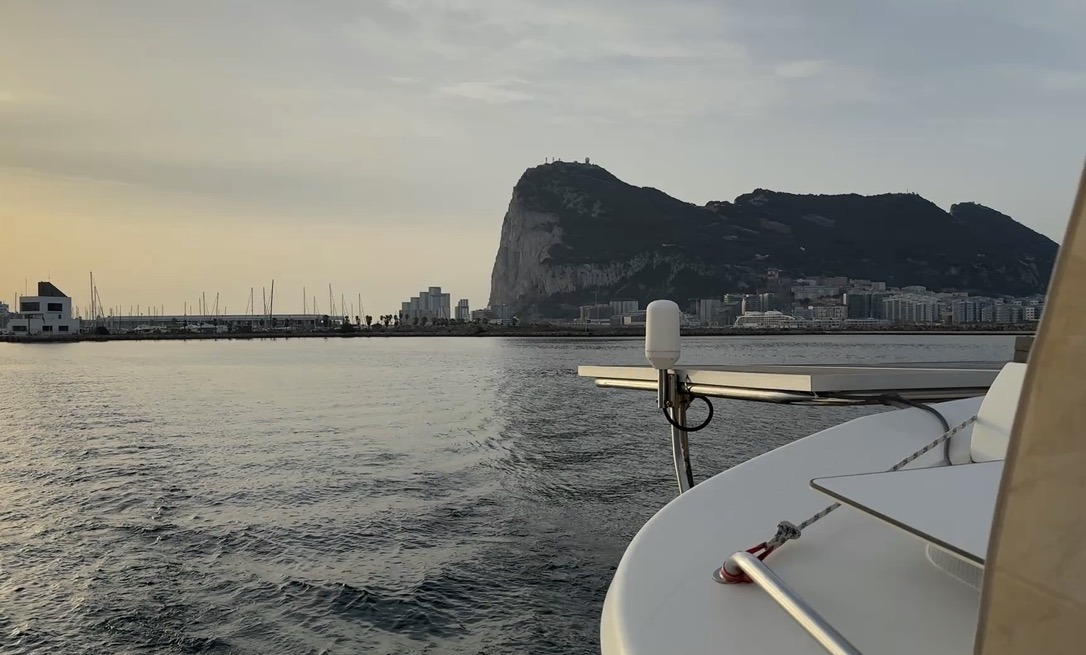
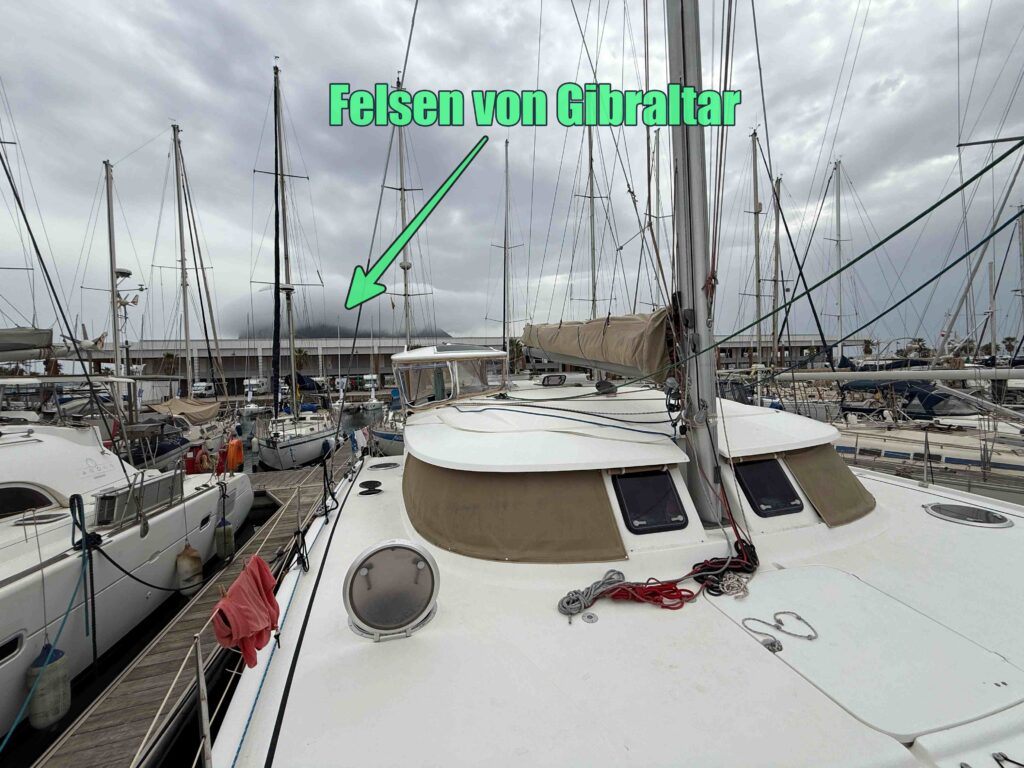
What’s next: Our berth here is reserved through July 10; by then, I’d like to have all the replacement parts fully installed. We’d then sail the 50 nautical miles down to Santa Maria on July 11 to pick up my daughter Anna there. As of today, the weather looks pretty good for the period between July 15 and 22. The latest reports on the orca situation indicate that the whales were spotted near Lisbon a few days ago, which would mean a less risky passage through the Strait of Gibraltar for us. So the way might be clear. I haven’t decided yet whether we’ll follow the advice in all the forums and head to the coast of Portugal and Spain to then make our way to Gibraltar in daily stages along the 20-meter depth line, or whether we’ll take a direct course to Gibraltar. I think we’ll probably choose the second option. In any case, I’ll keep you posted. As always, I wish you all the best from aboard. Captain Pavlos

Reading time: 8 min

Ahoy, dear readers, from SailingSymi,

It’s been a while since I last posted on my blog. Unfortunately, the reason for this is my shoulder injury, which is healing slowly but steadily. Using a computer with my right arm has been too painful so far. While a good dose of painkillers and rest have helped reduce the pain, it still hurts to move my arm overhead or even just lift a glass off the table. Since we’ve booked our berth until July 7 and sailing wasn’t possible at the moment, we decided to visit another Azores island as tourists. In the Azores archipelago, which consists of nine islands, there are no ferry connections—only flights operated by two Dash 8 aircraft. So we booked a flight to Faial, the island that most Atlantic crossers make their first stop at. The port there, Horta, is the meeting place for all sailors, who can finally rest after their grueling journey. After a 150-nm, 40-minute flight, we arrived at the small airport—which had been completely modernized three years ago with EU funding—rented a small car, and drove to our hotel, located in the heart of the city with a view of the harbor. In the sunshine, we strolled along the piers and watched the arriving boats as well as crews cleaning their salt-encrusted boats or carrying out major repairs on broken masts or other significant damage. The harbor basin doesn’t offer much space, which is why many yachts anchor off the harbor. The pier walls and floors are famous for the hundreds of hand-painted images of boats that have arrived here, through which the crews immortalize themselves. Since they fade over time in the sun, the old paintings are painted over with new masterpieces. We found a total of three paintings by friends who had passed through here in recent years, and sent you the photos to show that their works are still visible. We didn’t have any paint, and with my arm in a sling, I didn’t feel like immortalizing us there anyway. We’ll keep our adventure in our minds, not on the pier.

Probably the most famous spot in the harbor is the “Peters Sport Café,” a sailors’ pub that’s been around since 1918—a place where new arrivals treat themselves to their first beer and share their experiences. In front of the café, we ran into our friends Evelin and Michi, along with their crew member Andreas from the “Ocean Fantasy,” who had left Bermuda five days after us and were also overjoyed to have arrived. It was a wonderful reunion and picked right up where our shared Caribbean adventures in 2024 had left off. We decided to spend the next few days together and explore the island in our rented Fiat 500. Also just arriving were our French friends from Bermuda with their dog Roxy—who had more or less survived the 16-day trip—and our Swedish friend David, whom we’d met the previous year in Savanna. So even after traveling thousands of kilometers, you always end up running into old acquaintances.

Faial, like all the other Azores islands, is of volcanic origin and rose from the ocean about 300 million years ago. They belong to Portugal and the EU, and to me they seem to be the last enclave in the EU where life hasn’t had to follow the path we’ve been familiar with throughout the rest of the EU since 2015. The people are extremely friendly. The typical Azorean is rather small and wiry in build. Many work in agriculture, and so the main export products are cheese, dairy products, meat, and fish. The islands are self-sufficient, and I find it fascinating that only locals work in the fields and markets—you won’t find any refugees here. In the restaurants and the tourism industry, the staff consists of locals and, strangely enough, Asians as well. The Azores are a peaceful place. The tranquility is also fascinating. Butterflies flutter, birds sing, and plump cows graze on lush green meadows. A thoroughly healthy natural environment. Another striking feature here is the low cost of living. A large beer costs 3.5–4 €, and a good dinner for two costs between 40 and 60 €. Compared to the United States or Bermuda (and even Austria), it’s a paradise. Thanks to the volcanic fertility of the soil, all the islands are covered in lush green meadows and an incredible variety of flowers. Hydrangeas, in particular, grow everywhere here like dandelions do back home. Climatically, the Azores are influenced by the Gulf Stream and therefore have an oceanic-subtropical climate that remains mild year-round. Temperatures are balanced, with mild winters (11 to 17 °C) and pleasantly warm summers (19 to 26 °C). Due to their volcanic origin, each island is crowned by its own volcano.
The highest (2,000 m) is located on the island of Pico, bears the same name, and is usually shrouded in thick clouds. For sailors, the nine islands are not necessarily the ideal sailing area, as their steep cliffs—rising from a depth of 2,000 m—do not offer safe anchorages. There are marinas on four of the islands, but they are usually very crowded.
The five of us drove around Faial in our Fiat 500. At the summit of the 800-meter-high volcano, we wanted to catch a glimpse of the vegetation-covered caldera, but unfortunately the entire summit was shrouded in fog, and it felt like being at the top station of a ski lift. I couldn’t go on a hike around the crater because of my injury, so instead we visited the small peninsula west of Faial—formed by a volcanic eruption in 1958—and its interesting museum. As the grand finale, the five of us booked a whale-watching tour, during which we spent more than an hour traveling by speedboat to the coast of Pico Island. In addition to seeing many dolphins, we were treated to the sight of a young female humpback whale at the end of the tour. From a distance of 100 meters, she was doing somersaults and slapping her fin against the water. It was an unforgettable experience.

After four days, we flew back to Symi on the main island of São Miguel. This is the main island of the Azores. It measures 65×16 km. In terms of infrastructure, the city has everything you need. A modern airport is just 4 km from the center, and the industrial port not only accommodates large cargo ships but also smaller cruise ships a few times a month. Like Faial, São Miguel is a lush, green island offering countless hiking trails and a diverse landscape. We’ve only seen a small part of it so far, but we’re looking forward to exploring more.
Our friends will also be sailing here on their boat in a few days. Since the condition of my shoulder is improving but professional help would be beneficial, I looked for a physical therapist in town. I found Louis, a young sports physical therapist who is also the president of the Azorean Therapists’ Association. He’s a man who inspires confidence. During the first session, after an examination, he helped me move around and confirmed my suspicion that nothing serious had happened, but that my tendons and muscles had been strained. I was sent home with a home exercise program, but I have another appointment scheduled for Friday. The costs are out-of-pocket and amounted to 40 euros—prices like those from the 1980s in Vienna. I’m optimistic that I’ll be halfway back in shape by the time I leave in 2.5 weeks.

We then rented a car for 14 days and can conveniently park it right near our pier. Today we waited out a heavy rain shower and then set off for the volcanic spa 40 km east of San Miguel. There, we found 39-degree-Celsius sulfur- and iron-rich volcanic springs flowing into small pools. Just like in a bathtub, we sat in the warm thermal water with 20 other guests and enjoyed it. The road up this ancient volcano is lined on both sides with man-high blue and white blooming hydrangeas and dense jungle, which was very reminiscent of the island of Dominica in the Antilles.

Repairs on Symi are never quite finished. Unfortunately, two days ago the electronics technician discovered that my Raymarine radar—which is only three years “old”—apparently has a hardware defect and would have to be sent to England. However, that would take at least six weeks, so it’s not feasible. So I’ll probably have to visit the nearest service center in Almerimar, Spain, where I’ll likely have to buy a new radar dome right away. He said the cost of a repair is almost the same as the price of a new unit. The new generation of devices, regardless of the manufacturer, is becoming increasingly prone to failure, and the company’s new policy is to no longer supply spare parts to local mechanics so they can keep everything under control in just two locations: either in London or in the U.S. That’s really lousy customer service. Thanks, Raymarine.
The quintessential throwaway society. It's just sad.

So what’s next for us?
We’ll stock up on provisions here in Ponta Delgada until July 7, then sail the 50 sm to Santa Maria, the southeasternmost island of the Azores. My daughter Anna will fly there on July 12 and join us for the next leg of 1,000 nautical miles (1,820 km) to Gibraltar. We’re looking forward to it. This seven-day trip should be much easier to sail; the only potential problem might be the last part of the route, “Orca Alley.” Well, maybe the whales will be on vacation somewhere else by then and let us pass.

All that remains is for me to send you my best regards and wish you a cool head during your first heat wave of the year. Yours, Capt. Pavlos

Reading time: 8 min

Ahoy, dear readers, The title says it all. We’ve arrived at our second destination on the Atlantic, though not without some problems.
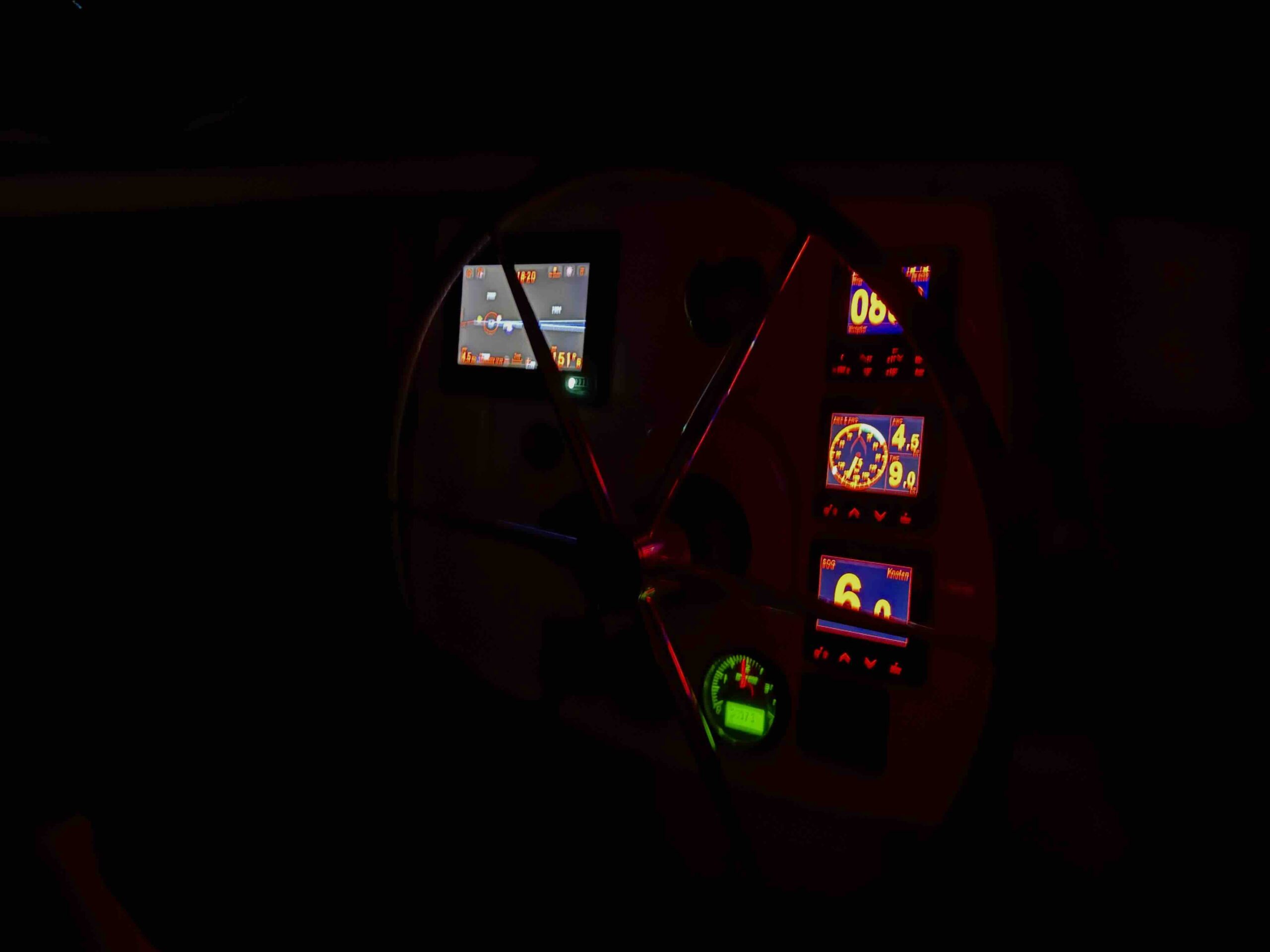
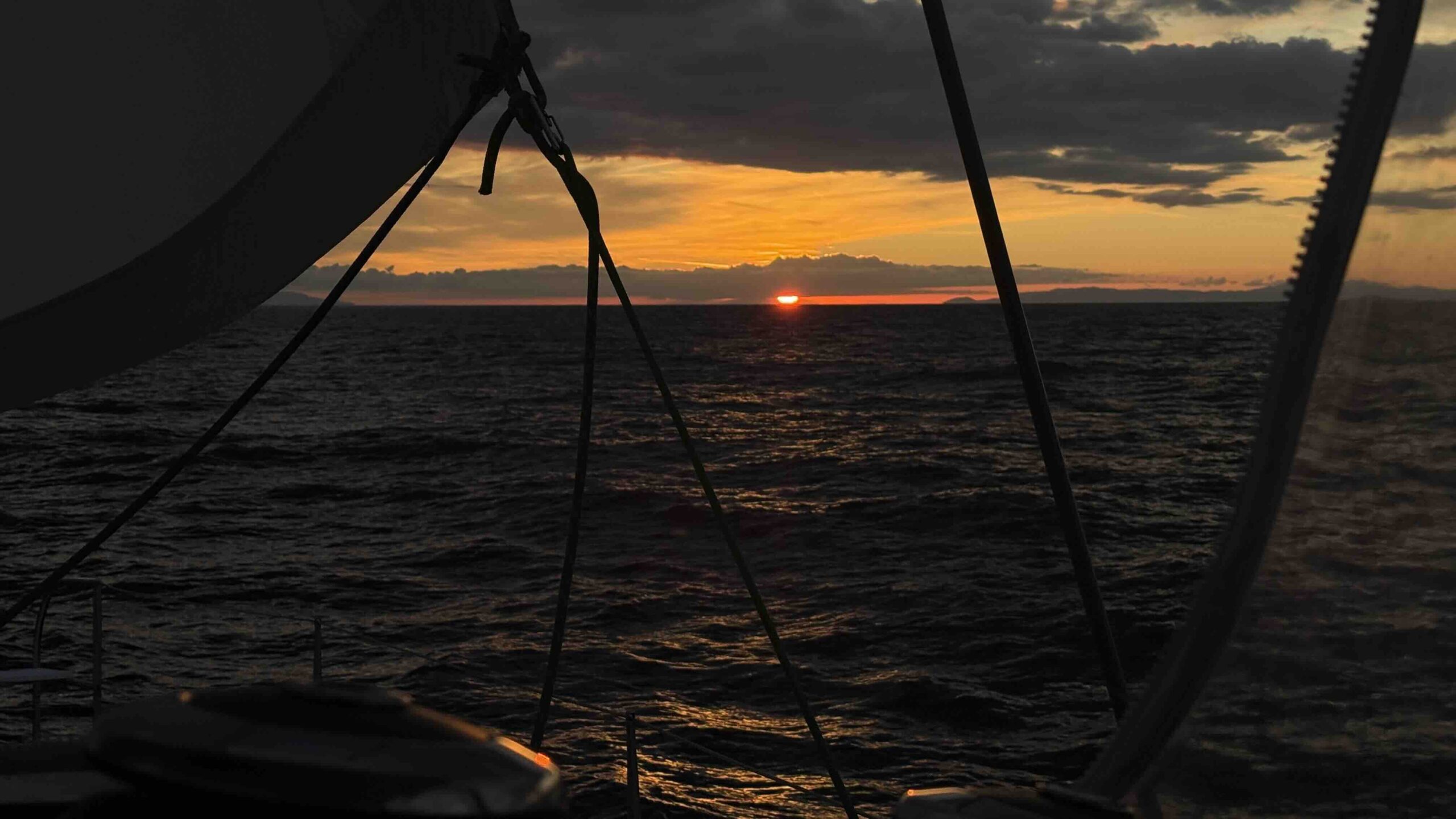
The flow we’ve been in for the past two weeks is abruptly interrupted by the words “Land in sight.” You quickly get used to this steady, forward-moving rhythm on board. You know that the boat is always moving toward its destination. Sometimes in a storm, sometimes in calm waters, but the journey always continues—in daylight and in darkness—with no traffic lights, no speed limits; only water and wind set our limits.
Then we reach our destination, and the flow comes to an end. We did it!!!
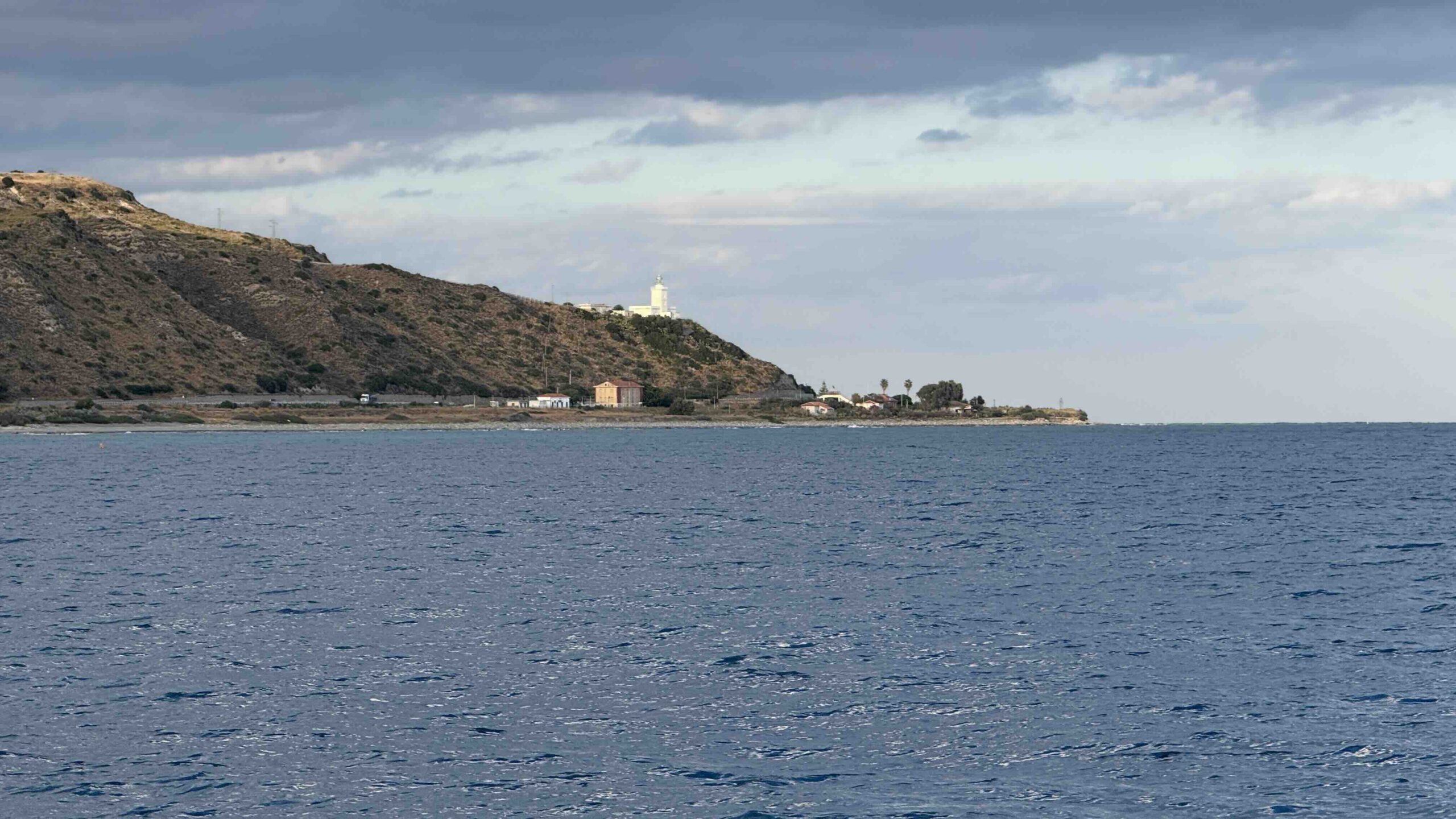
On the 16th day, around 6:00 p.m., we docked with Symi at the Schengen customs pier in the marina of Ponte Delgada on São Miguel, the main island of the Azores. I stepped carefully off the boat onto the solid concrete. After all, we now had to re-enter the EU. Friendly passport control and minimal bureaucracy characterize this Schengen outpost.
I walked along the pier—which felt very stable under my feet—over to the marina office and registered for a berth at the dock. The nice gentleman, however, told me that there were no more open spots in this huge marina. I was a bit disappointed, looking very dejected and land-sick, but he said he had a spot available for two days. We moved there and then set out on our 2,146-nautical-mile journey from Bermuda. Abends gingen wir essen und genossen wackligen Schrittes die Altstadt von Ponte Delgada. Leider passierte mir dann ein Missgeschick. Am dunklen Trottoir, nach Speis und Trank, übersah ich eine 1cm Schwelle und flog unkontrolliert zu Boden, sodaß meine rechte Schulter kurzzeitig luxierte und zum Glück beim Aufrichten wieder in ihre normale Position zurücksprang.

A really stupid, completely unnecessary incident that’s been causing me some pain ever since. But don’t worry—the painkillers are helping, and it’s already a little bit better. Since I went to the marina office the next day with a triangular bandage wrapped around my right arm, the nice gentleman at the counter granted us our berth for four weeks, saying, “With this condition, I cannot send you out onto the Atlantic.” So now I have time to recover from the injury, and we have time to do some sightseeing. We wanted a safe spot—but the price we paid to get it is another story. Before Meiki left us on Saturday, we reflected on the trip once more over our final dinner. Meiki said that for him, too, this storm system we encountered was the strongest sustained wind he’d experienced in his 40-year career. To a certain extent, we’ve become average tourists using Symi as our hotel.

I'm sure you understand that we won't be posting any blog entries over the next few weeks and will just be drifting around the Azores. I'll definitely be back in touch when we start preparing for the crossing to Spain or Gibraltar. I'd be happy if you'd join us again then. All the best, and stay healthy. Your (currently) somewhat disabled Captain Pavlos

Reading time: 2 min
Page 1 of 411234102030...Last »