Hier findest Du alle

Find all Blogs of 2026

BLOGS USA-EUROPE 2026

Klicke hier um uns zu finden

Click here to locate us

Trackingpage SYMI

Alle Filme chronologisch geordnet

All films chronologically ordered

Film

Dear friends of SailingSymi,

SYMI and we arrived today, Friday 23 September 2026, following a final three-day trip to the island of Kefalonia in Greece.
To round off this travelogue, let’s go back a few days.
After a short break in Sardinia, we set off at 6.00 am on the penultimate leg of our journey heading east. The departure time was chosen precisely in line with the weather forecast. As mentioned in the previous section, autumn weather in the Mediterranean tends to be rather changeable, and it can happen that unfavourable winds leave you stuck in one place for days on end.
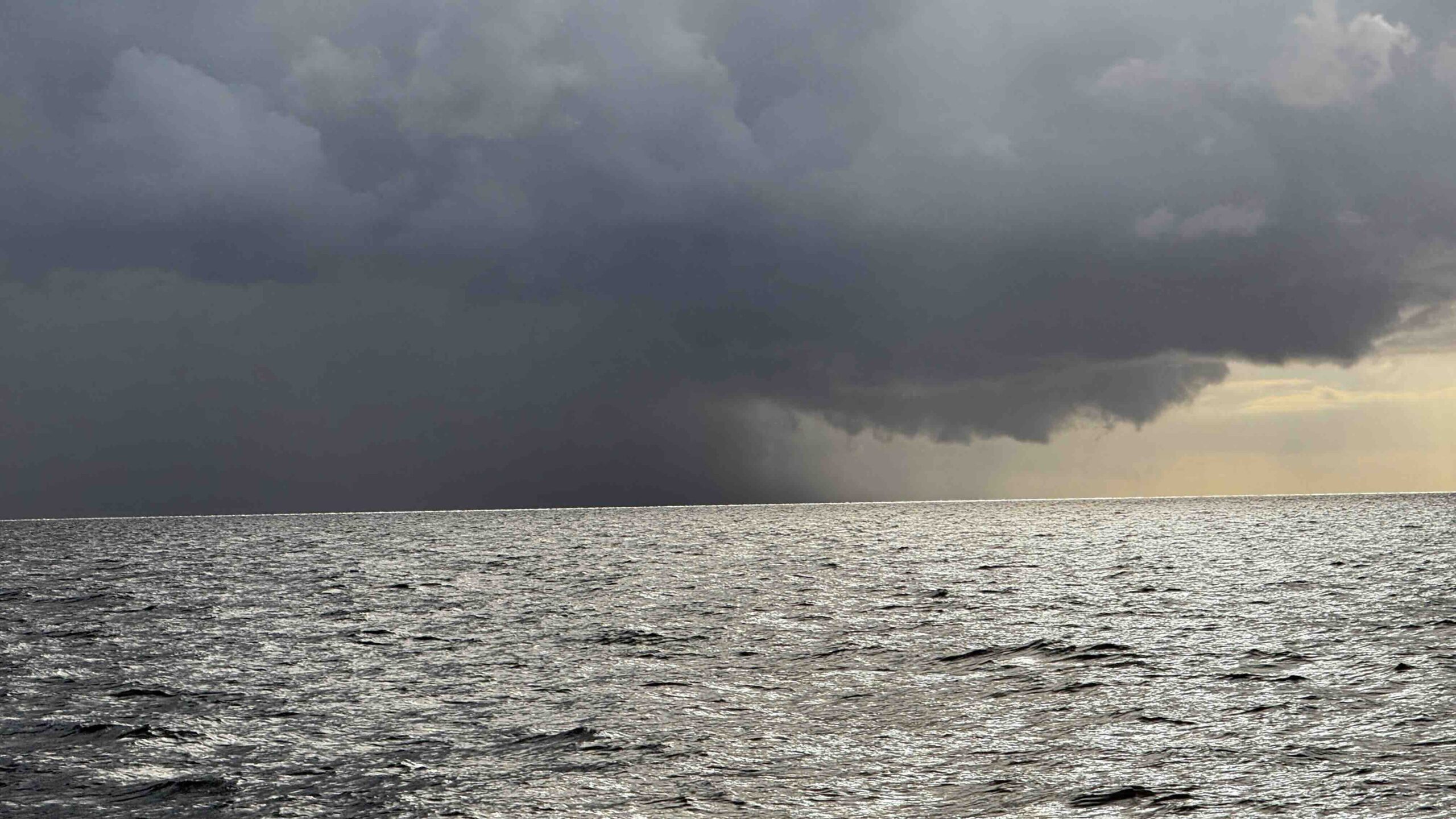
After three hours of smooth sailing towards Sicily, huge black rain clouds rapidly appeared ahead of us, accompanied by fierce flashes of lightning. The wind ahead of us picked up and soon reached 30 knots, prompting me to tack to avoid the direction the storm was heading. This detour cost us a few hours, but we remained safe and dry.
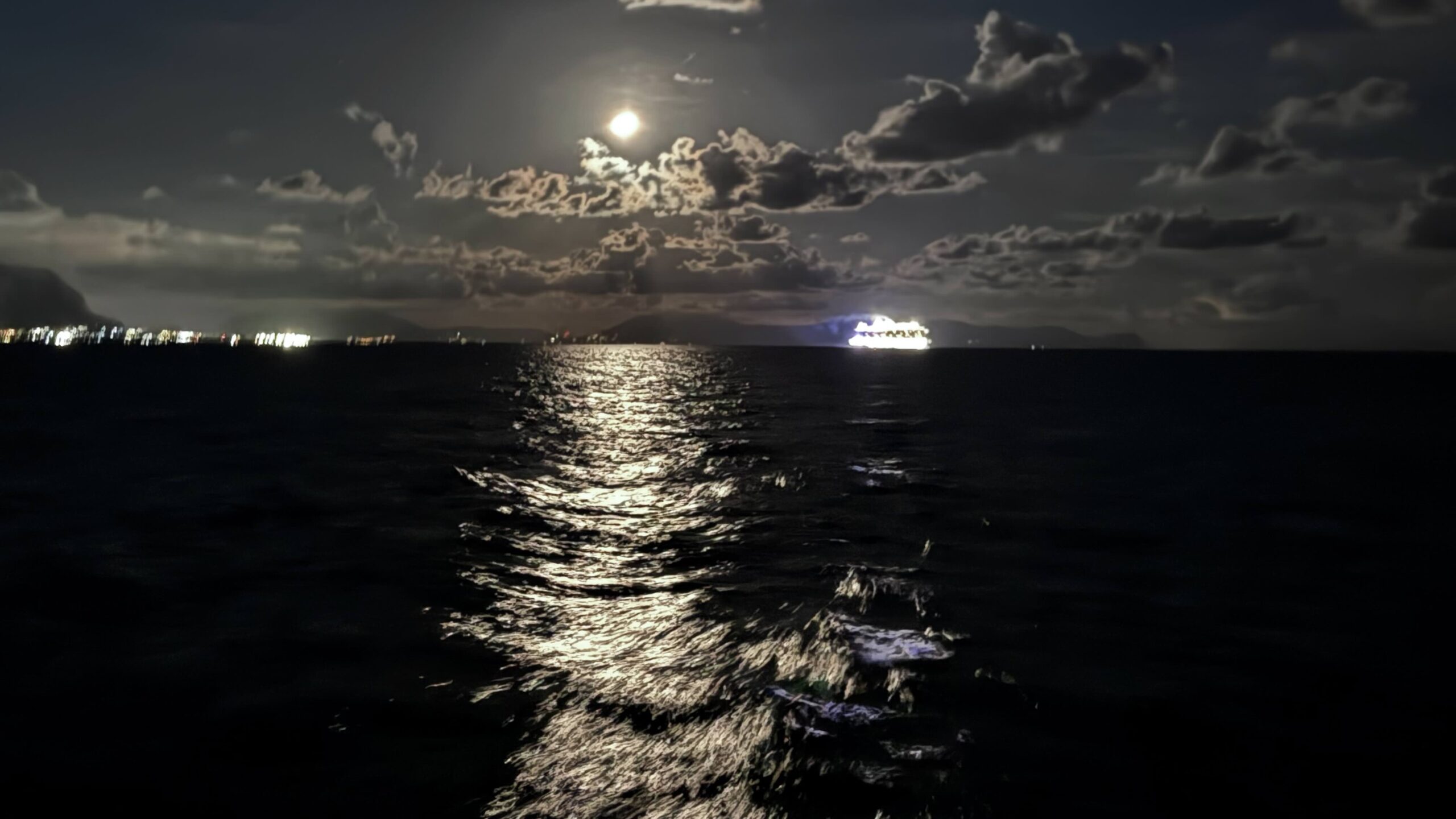
On the morning of the following day, we passed Palermo, a popular port of call for cruise ships. We’d also noticed this on our chart plotter during the night. One monster after another crept out of the harbour, crossed our course and then disappeared in various directions, their deck lights still visible for miles. The north coast of Sicily is about 280 km long and offers only a few safe anchorages, which, in turn, provide real shelter only when the wind is blowing from certain directions.
My plan was therefore to reach the north-eastern tip, just before the Strait of Messina, in one go. Here, too, a few squall gusts ‘helped’ us maintain our speed, without ever posing a danger.
I had chosen an anchorage for that night which was only reasonably safe when the wind was from the south. It was exposed, 300 metres off the coast, on a sandbank, between a restricted area to the east – which forms part of the Strait of Messina – and an Italian Navy mine-clearing training area to the west.
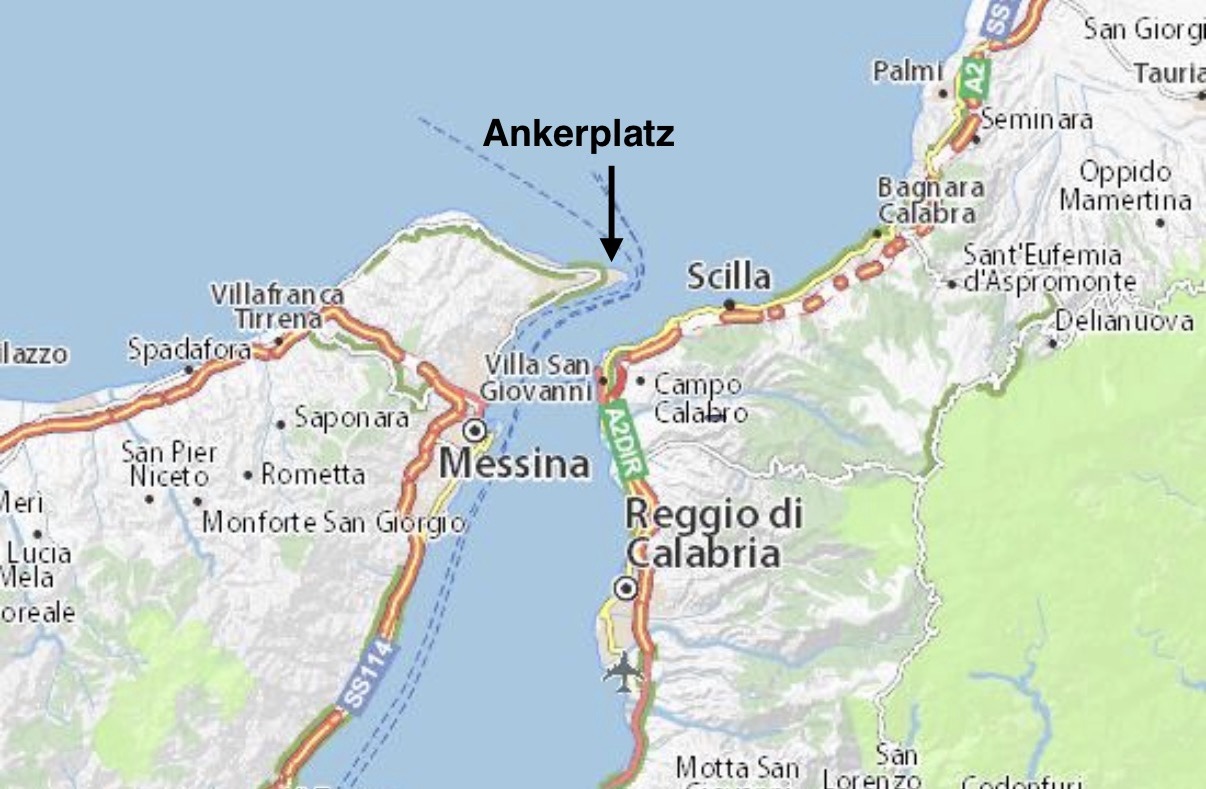
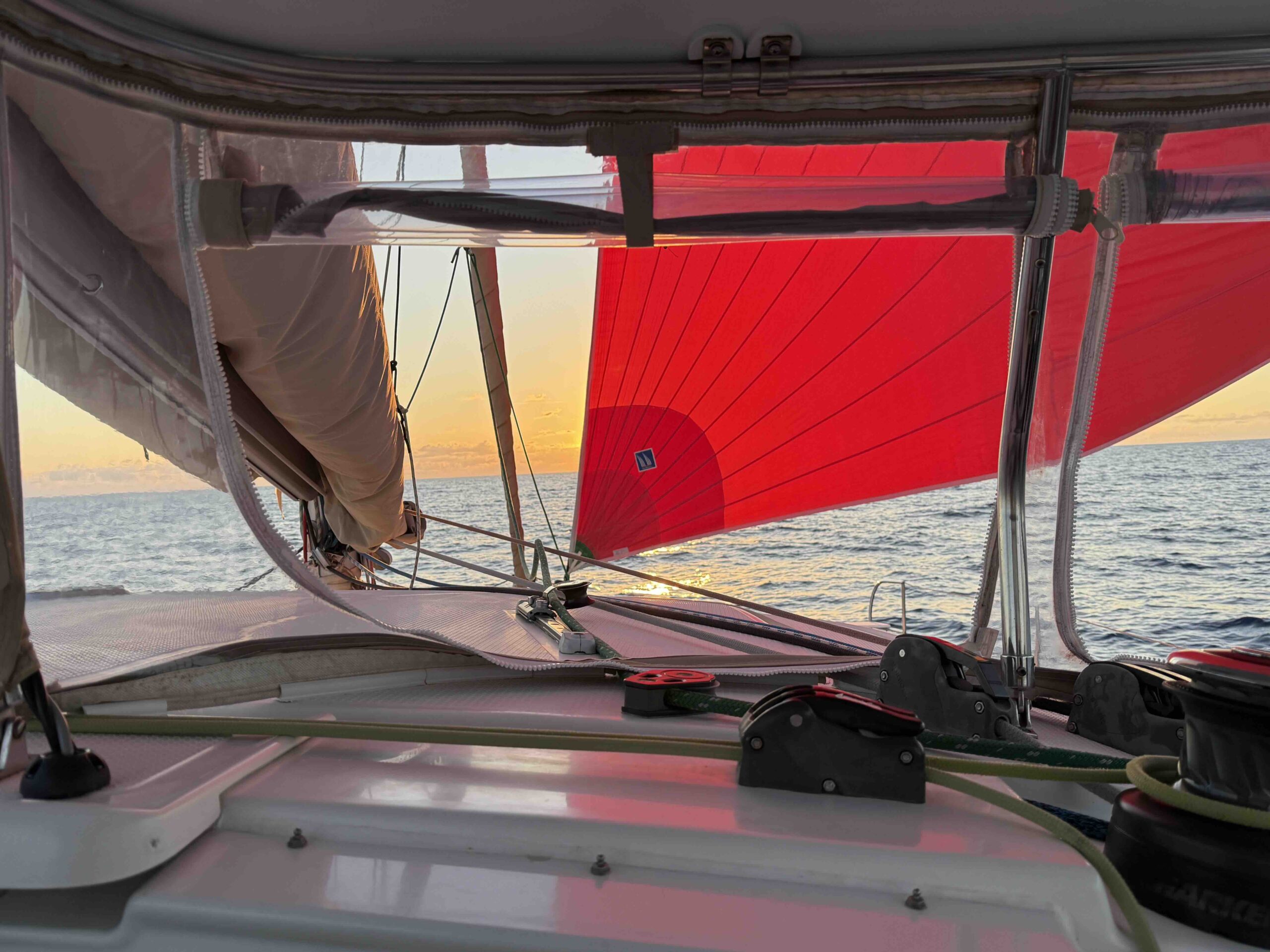
My calculations, using the PredictWind programme – which has really proved its worth over the years – paid off completely. It was already starting to get dark, but the most important thing was that the north wind died down and veered south. As a result, apart from two heavy downpours, we lay safely at anchor all night. In unfamiliar waters with currents and uncertain weather conditions, I like to use an anchor alarm.
This is an app installed on the boat’s electronic system which you activate when the anchor is lowered, then select a radius in metres within which the boat is allowed to turn. If it touches the edge of this virtual circle, an alarm sounds.
Wir konnten uns in dieser Nacht gut ausruhen und um 8:00 Uhr ging es wieder Anker auf und hinein in die Straße von Messina, einem Ort, der in der griechischen Mythologie, in der Odyssee Homer’s, durch die Geschichte von Skylla und Charybdis zu den bekanntesten Abenteuern des Odysseus gehört.
Es gibt sogar hier eine lustige Parallele unserer Reise mit Odysseus Weg nach Hause nach Griechenland. Schließlich ist unser Ziel die Insel Kephalonia, die Nachbarinsel von Odysseus Heimat, Ithaka. Und so erzählt es die Geschichte:

After the Trojan War, Odysseus is on his way back to Ithaca with his men. During his long odyssey, he eventually reaches a dangerous strait where Scylla (now a place called Scilla) lurks on one side and Charybdis (Messina) on the other. Scylla is a terrifying sea monster. Homer describes her as a creature with several heads – she lives in a rocky cave and snatches passing sailors with her long necks. Odysseus is unable to prevent Scylla from seizing and devouring six of his men. On the opposite side lies Charybdis, a mighty sea whirlpool that sucks in the water three times a day and spits it out again. A ship that comes too close can be swallowed up, crew and all. Odysseus faces a dilemma as he navigates through the strait: either to be sucked into the whirlpool or to be attacked by the monster. This has given rise to the saying that has survived to this day:
‘Between Scylla and Charybdis’.
It means that one is caught between two dangers and has no truly good solution
.

We were in a much better position than Odysseus. I had an up-to-date ocean current forecast, a Starlink satellite connection, a recent weather report, and had already crossed the Strait of Messina twice before with SYMI. So, let’s get on with it. The current sped us up by nearly three knots, and the only hazards were the roll-on/roll-off ferries, which shuttled back and forth between Reggio and Messina like a swarm of wasps and had absolute right of way. After just two hours, we reached Reggio di Calabria and chugged on under engine power until we reached the point where the Ionian Sea opens up to the east. At the southern tip of the Italian ‘boot’, the Calabrian coast offers nothing particularly beautiful. A gas storage facility, a concrete works and a few small villages are all there is. The few palm trees and the lighthouse marked the furthest point of Calabria.
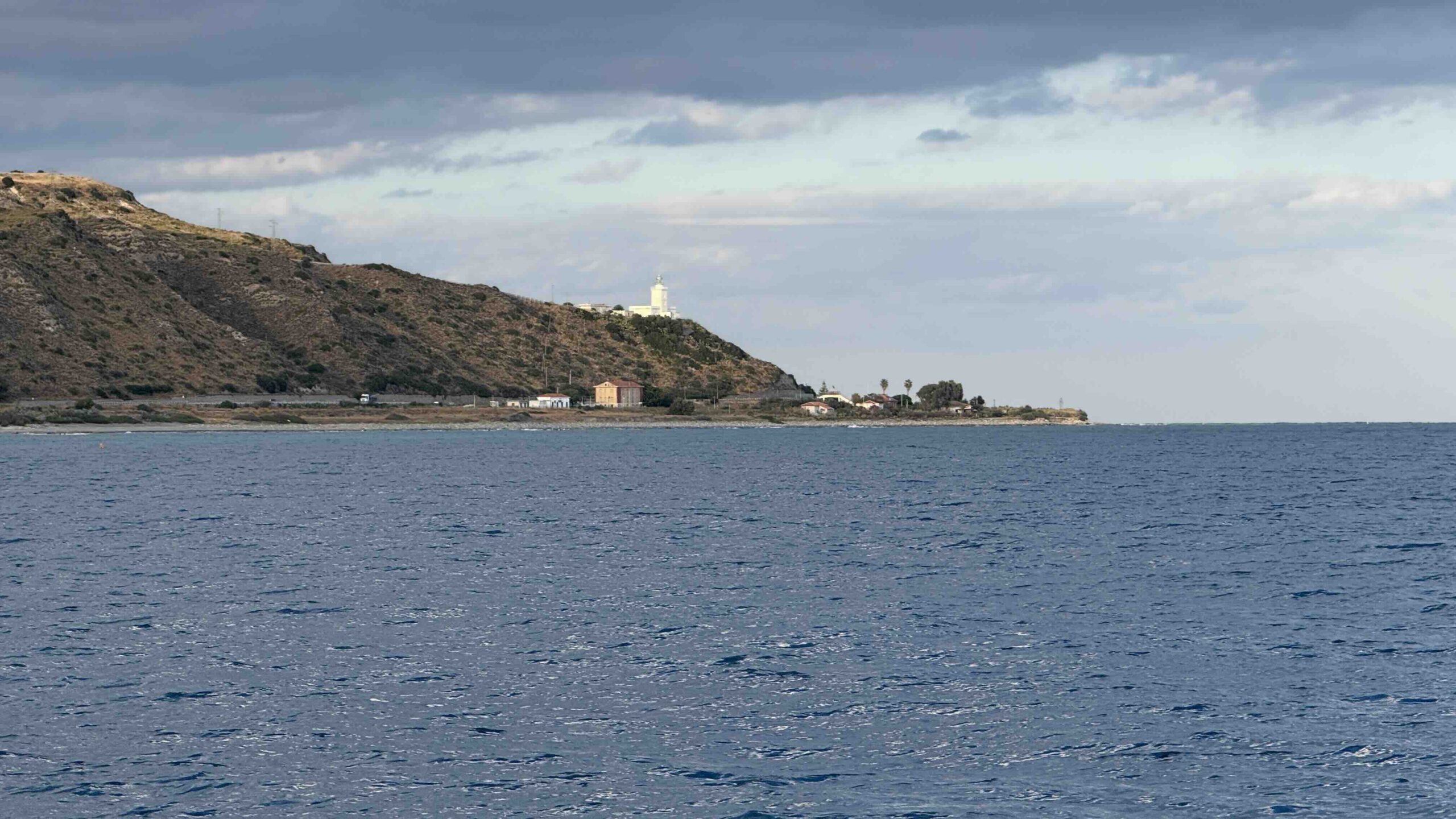
Shortly before sunset, we reached this south-eastern cape and sailed into the night, battling a fairly strong north-westerly current there as well as quite a large swell, which had been caused by the strong wind the previous day in the Ionian Sea.
Yesterday’s day’s sailing was phenomenal. Every sailor will agree with me that there is hardly anything finer than sailing down the waves at up to nine knots on a half-wind course (with the wind coming at 90° to the boat) at 15–18 knots. Marvellous. The final night-time sail of this great voyage was illuminated by an almost full moon and was wonderfully calm.
I took over from Andrea again at 4.00 am for my watch. Then, around 6.00 am, the outlines of the islands of Zakynthos and Kefalonia appeared on the horizon beneath the orange sunrise.
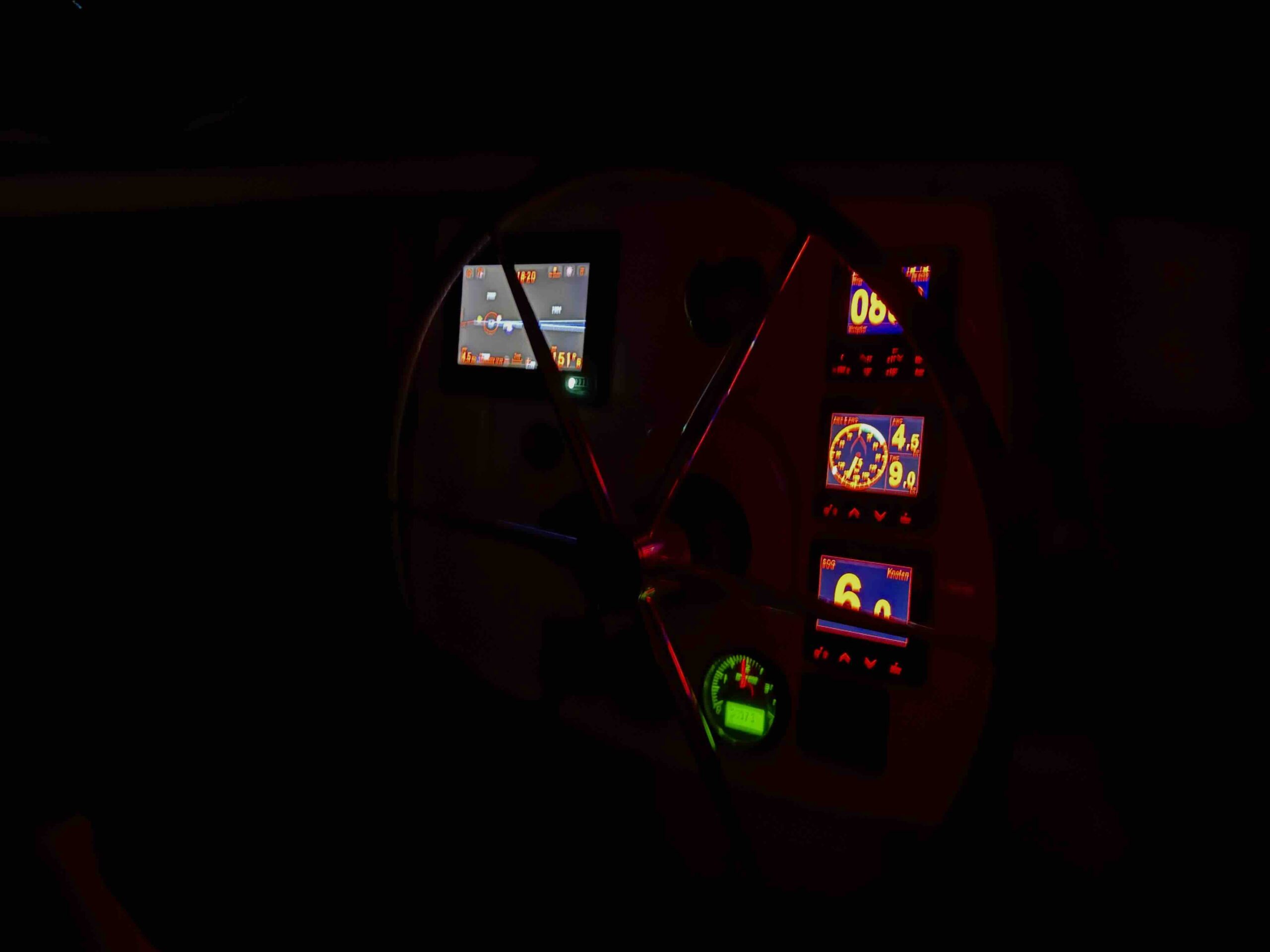
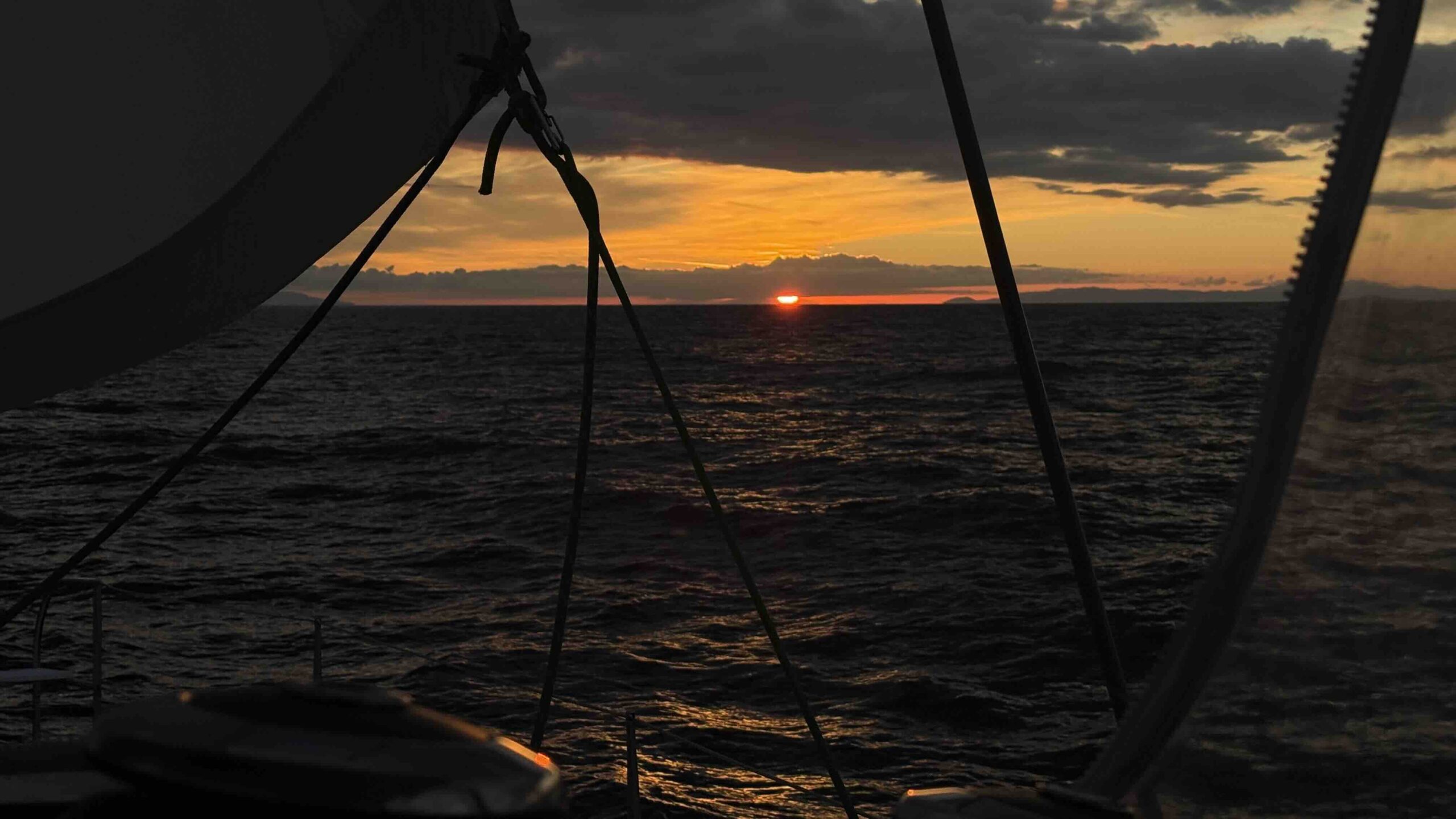
Feeling both happy and a little melancholic, I gazed at the rising sun. Was it all over now? Had my big project – one of my lifelong dreams ever since I was a child, to travel far and wide in my own boat – really come to an end? For us, time probably didn’t fly by quite as quickly as it did for you. Every day we got to experience something new, explore unfamiliar areas, meet new people and make friends. It was full of variety – sometimes very tiring, and at other times absolutely stunning. I’m so glad I made films of our adventures. They are living memories and will remain a record of our journey.

On the nautical chart, it was definitely a done deal. The circle is complete; the routes have come together again at their points. We’ve been on the move for three years (me, with my shoulder, ‘almost’ unscathed). Now that we’re back in Pavlos Kostekis’s adopted home, the travelling is certainly not over. As my dear sailing friend Reinhold once said: ‘The Caribbean was good and the Bahamas were brilliant, but Greece is the best.’ That’s exactly the plan. I’d love to carry on sailing around here.
Vom Punkt des Sonnenaufgangs waren es nur knapp 20 Seemeilen bis zum großen Ziel. Was war dieser Katzensprung schon im Vergleich zu den seit Beginn der Reise zurückgelegten Meilen:
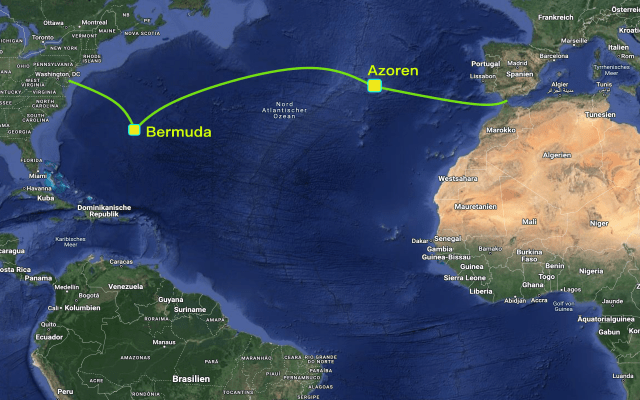
Von Gibraltar legten wir mit Symi in drei Wochen bis hierher alleine 1352sm (2500km) und seit Juni 2023 ließen wir mit der gesamten Atlantikroute 15.952 Seemeilen (29.511km) im Kielwasser zurück. Dabei haben wir uns und hat sich das Boot wirklich tapfer geschlagen.
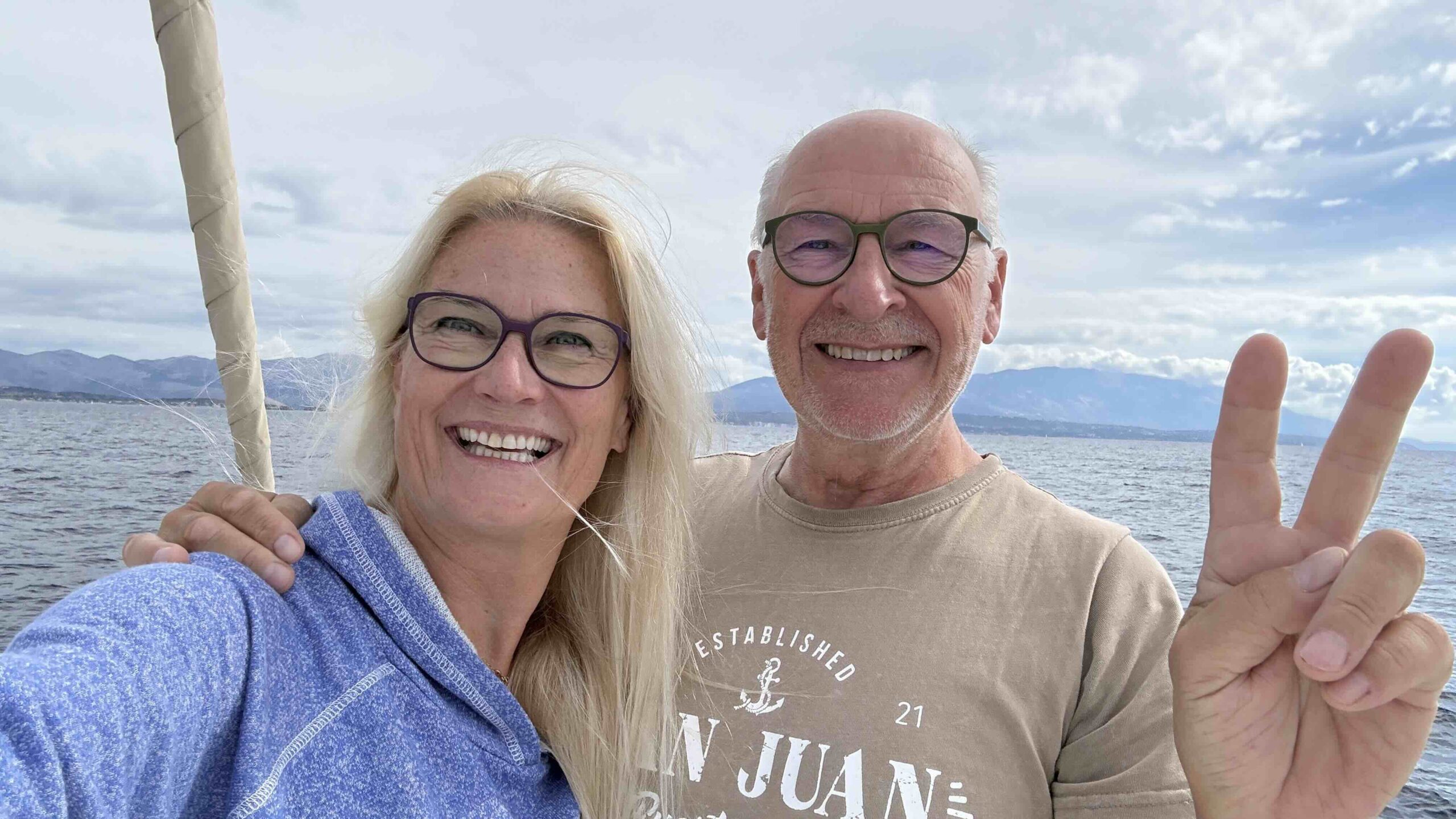
So what shall we do now?
We’re calling it a holiday in Greece. We’ll be chilling out here in the Ionian Islands for a good two weeks, with no stress. On 15 October 26, we’ve got our crane appointment at the Mesolonghi marina, and then it’s time for winter storage, the winter closure and our flight home to Vienna.

Best wishes once again from on board
Andrea & Pauli (the Symis)
Reading time: 6 min

Dear friends of SailingSymi,
After arriving in Gibraltar, we devoted ourselves entirely to ‘Symi’.
The spare parts I’d ordered from Germany had arrived, and I was able to collect them from the marina reception. I’d had to order new mooring lines, as the old ones had unfortunately become somewhat frayed during our seven weeks at the marina in the Azores.
Andrea tidied up and took stock of the food supplies on board to draw up a shopping list for everything we’d need for the final leg of our return journey to Greece.
I worked through the list of repairs. These included fitting the new mast light, checking the starboard bilge pump, fitting a new pump with an inlet to the starboard toilet, and generally getting Symi technically ready again for the start of the next leg of the journey.
After endless back-and-forth, the new high-pressure pump for the air-conditioning system finally arrived in the harbour, and I was able to fit it successfully. Evelyn and Michi from the Ocean Fantasy also arrived in the harbour on their boat, having travelled from Vienna, and we enjoyed two final, fun and cosy evenings with them. As we learnt, Michi’s decision was final: after three years sailing round the Atlantic, the constant maintenance of their boat had simply become too much for him, and he wanted to devote himself to other things. It’s now up for sale. We thought that was a real shame, as a few summers spent with them in Greece would certainly have been lovely.
Just like in a hotel, I walked over to reception to pay for the two extra days at the marina and the water I’d used, and to say goodbye. 


Sunday, 5 September 2026. Here we go again. We set sail and headed first for the petrol station in Gibraltar, as 1 litre of diesel costs just 1.57 euros there in the British exclave – it would have been foolish to fill up with marina diesel at 2.25. After all, we were still 100 litres short, which we pumped into our spare jerrycans.
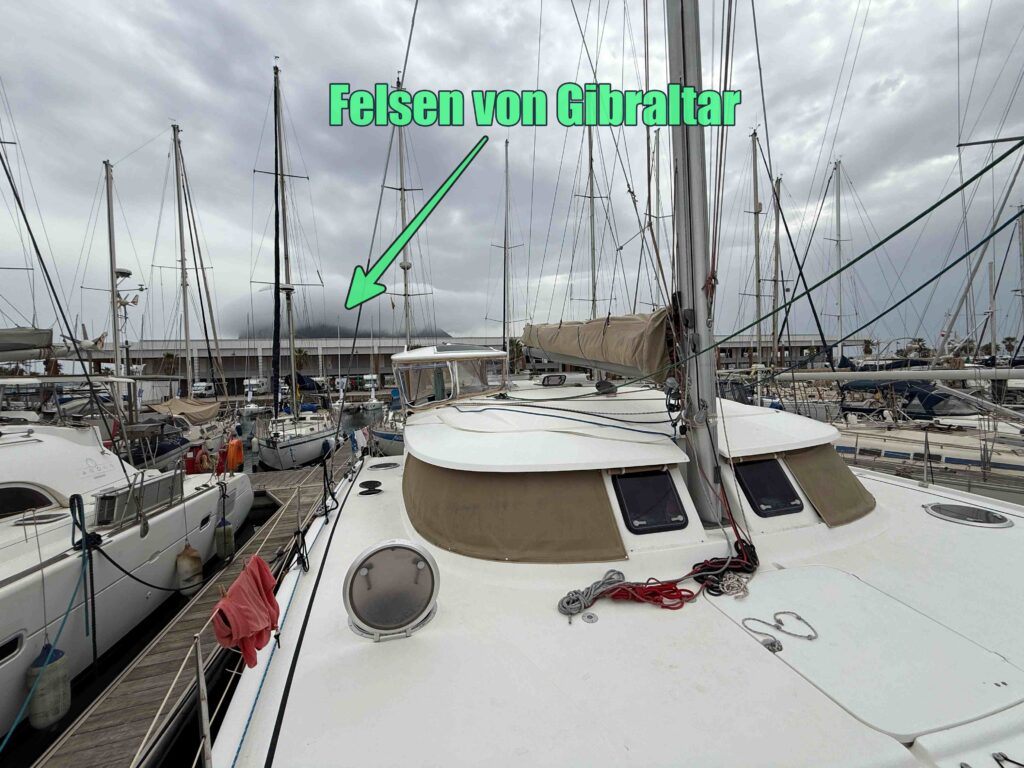
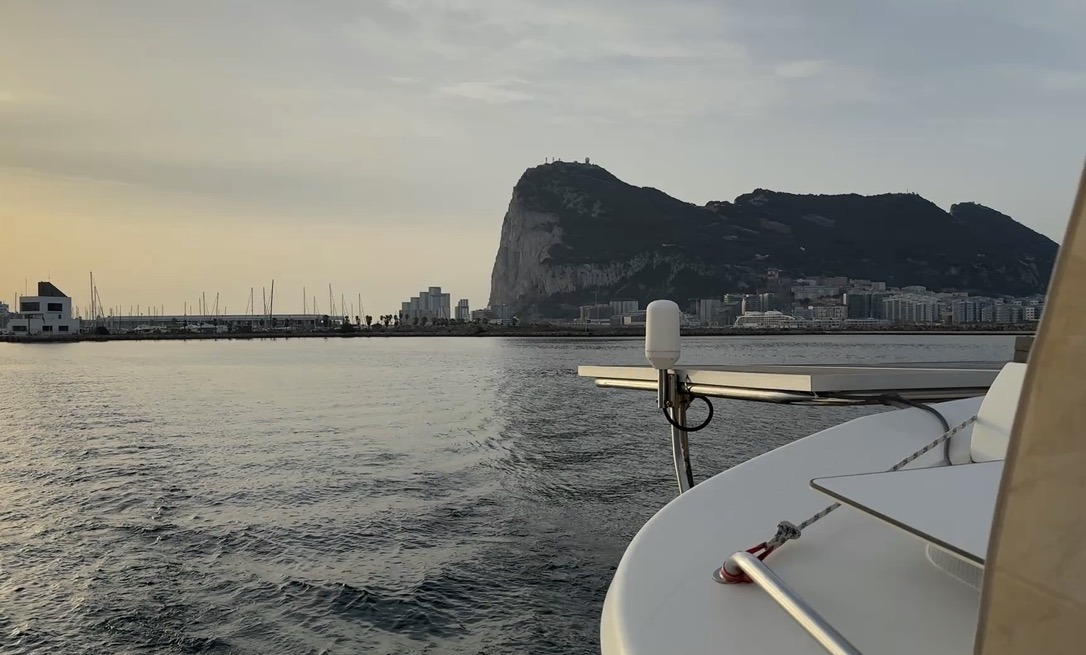
Then we set off, cutting across the field of vessels – mostly tankers – anchored in the roadstead of the large Bay of Gibraltar. We motored round the western end of the Rock of Gibraltar, then set a new course of 045, heading towards Almería at a distance of 12 miles from the southern coast of Spain.

The voyage was almost completely windless, and I knew from our planning that we would have to cover a large part of our route under engine power. However, after the thousands of kilometres we’d covered since leaving America, this didn’t bother me so much; on the contrary, I enjoyed chugging along quietly for a change. After a peaceful night’s sailing, the sun was shining once more on a calm sea; we passed the south-eastern tip near Almería and, in the late afternoon, finally dropped anchor in a quiet bay for the first time in ages. The water was wonderfully clear and 27°. We jumped in and I was finally able to check the underside of the boat with my diving goggles again. I hadn’t done that for a long time. Using a metal spatula, I scraped a layer of barnacles off the propellers. The unevenness created by the barnacles on the brass surfaces causes turbulence as the propeller rotates, which reduces the boat’s speed by up to half a knot. I also noticed that the zinc anodes, which had been newly fitted in Deltaville and are mounted on the propeller shaft to prevent metal corrosion, were almost completely worn down and were now only 3 mm thick. The replacement anodes were quickly fitted.


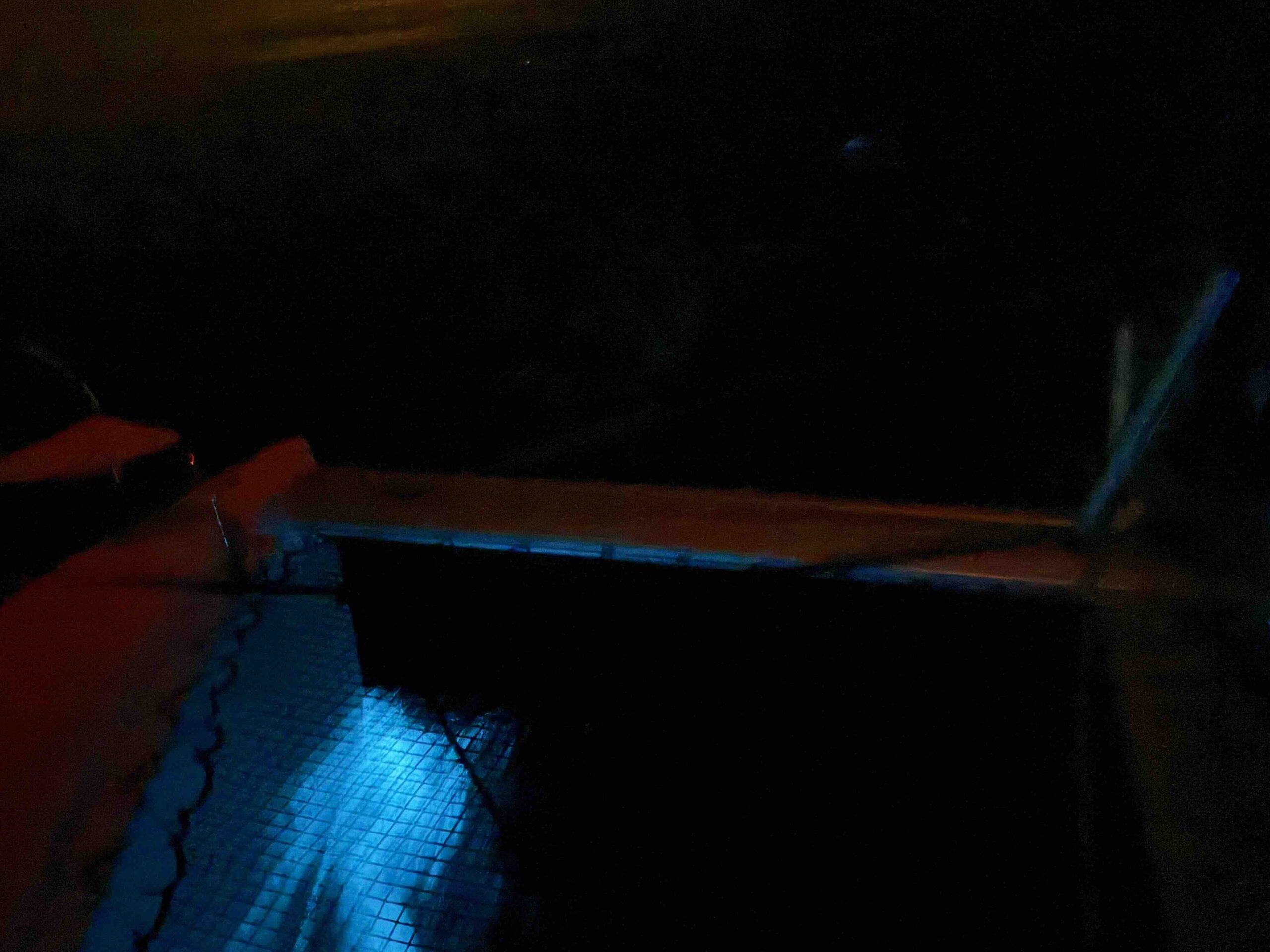
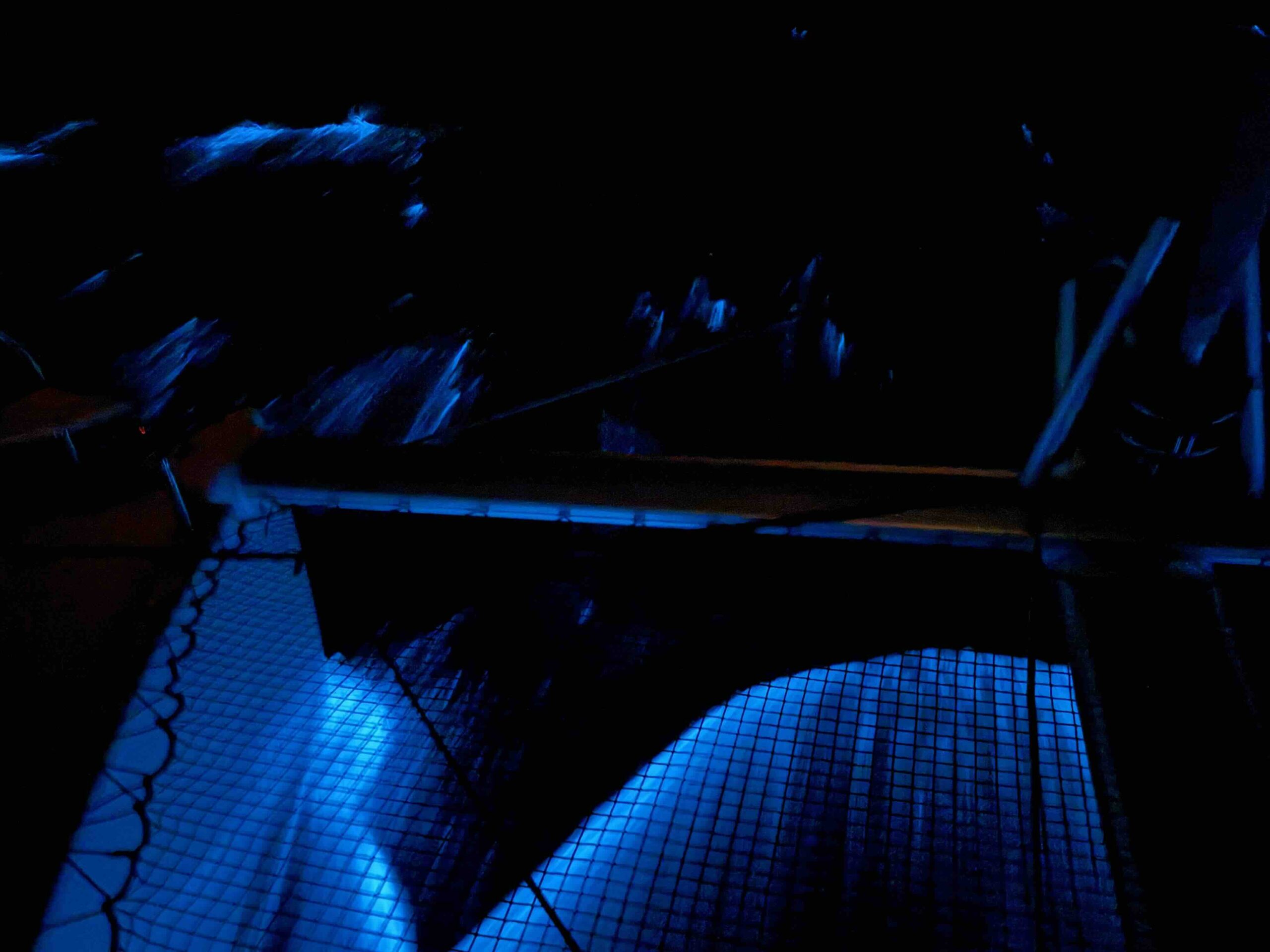
The following night, during the changing of the guard at around 2.00 am, we witness a spectacle unlike anything we have ever seen before. Due to the high water temperature, there is pronounced bioluminescence in the sea. This is a violet, bluish glow emitted by microscopic organisms, triggered by contact with these ‘creatures’. Simply running your hand through the water is enough to make them glow.
That night, as Symi ploughed through the water, it created violet-blue bow waves that were split into a V-shape by the bows. Some of the waves alongside the boat glowed blue as they passed by. Ahead of the bow, a little way out, we then observed a more intense light and glowing, rippling waves, which were clearly approaching us. We’d never experienced anything like it before. In the middle of the night, there were two dolphins playing. They were enveloped in blue light. This scene immediately reminded us of the landscape and creatures from the Avatar films, ‘Pandora’. Every time the dolphins surfaced, the sea glowed even more brightly. After an hour, the spectacle was over; apparently the sea temperature had changed and everything was dark and still again. The photos were taken only with an iPhone camera and aren’t perfect.

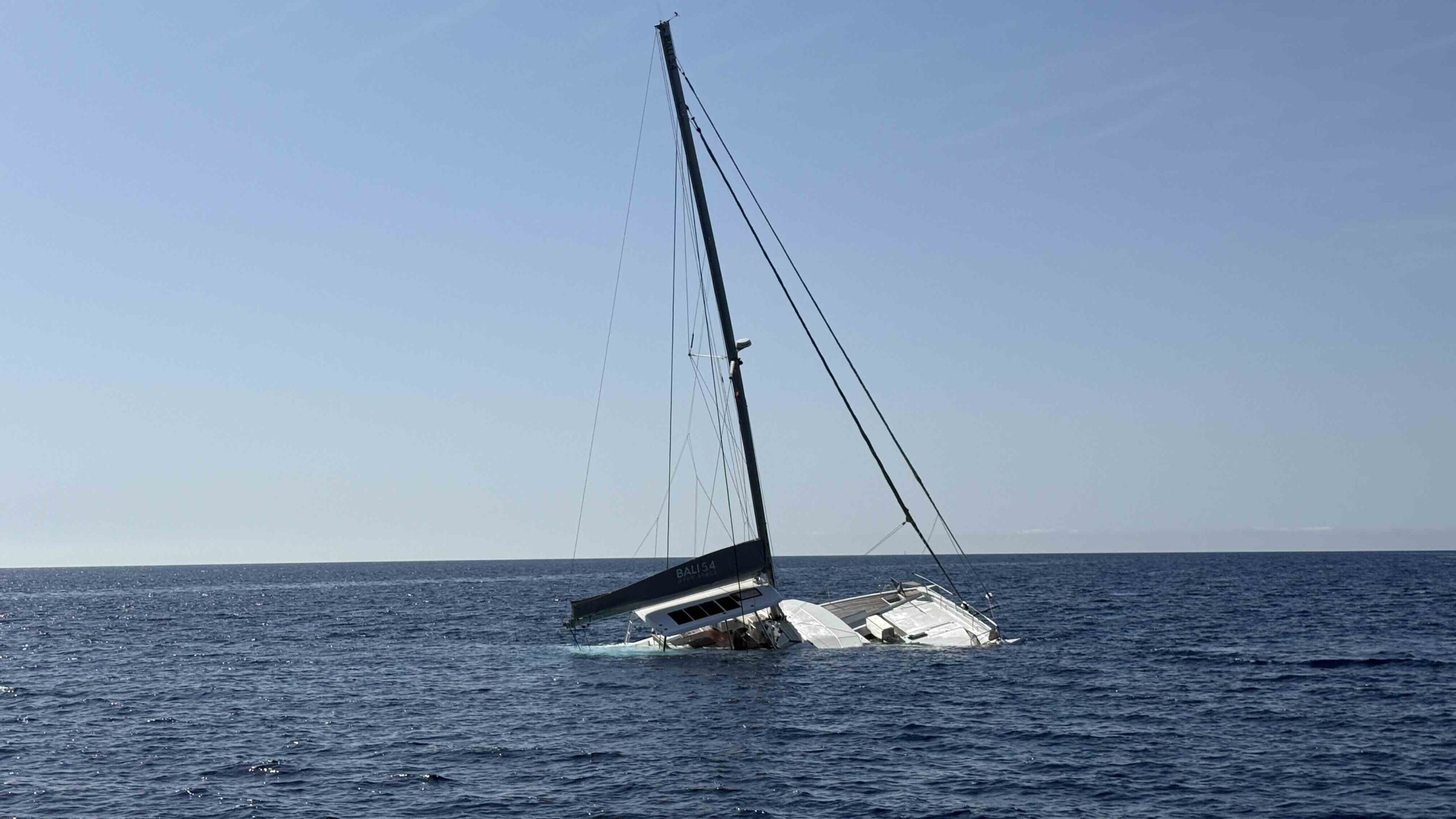
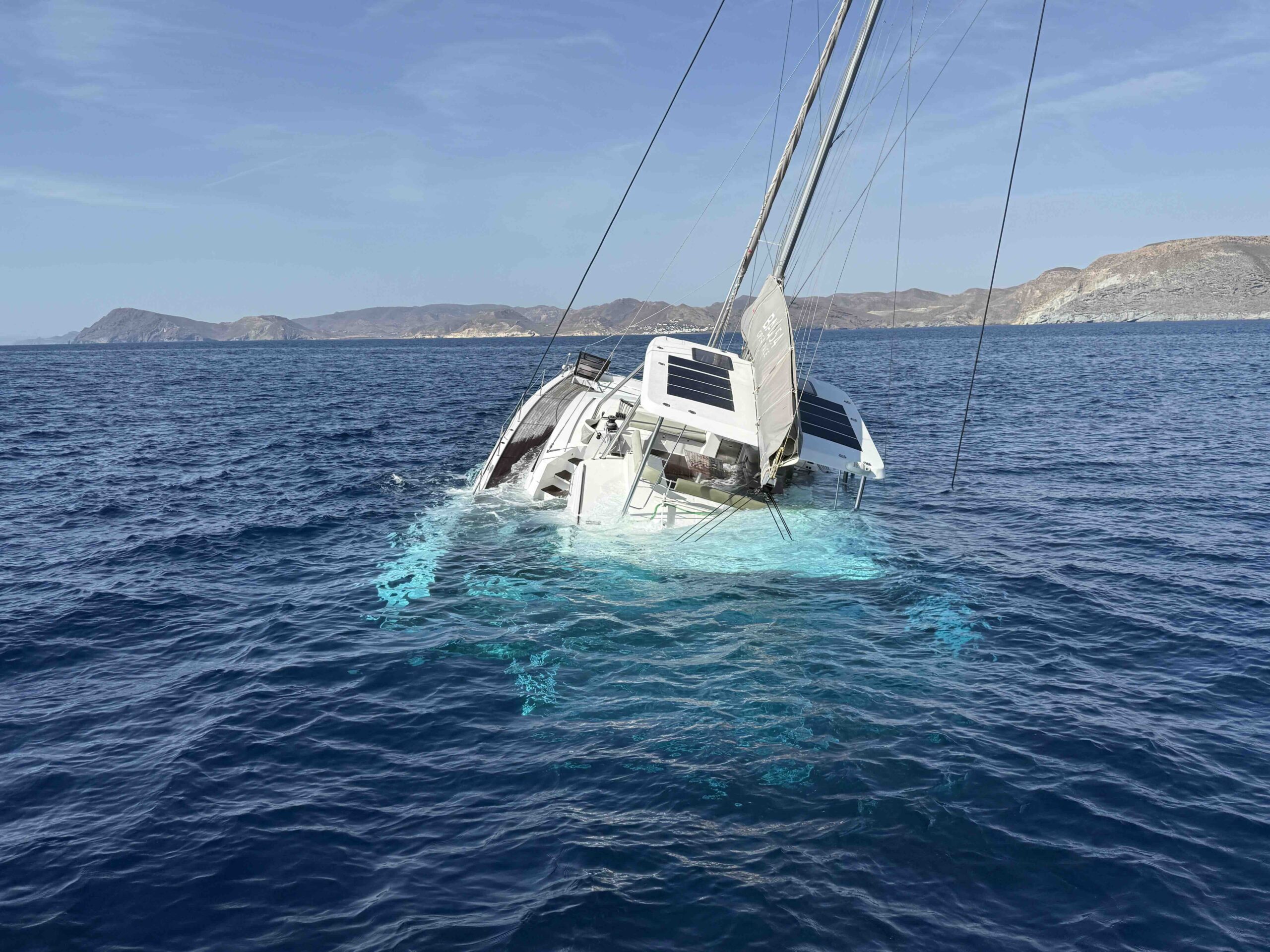
After that exciting night, we continued our journey northwards along the east coast of Spain. Still no wind, so we were motoring again. In the distance, I spotted a boat that seemed to be heading straight towards us. As the mast was leaning unusually at an angle above the horizon, I took out my binoculars and was horrified to realise that it was a catamaran, with only part of the left hull and the mast visible above the water; the rest of the boat was submerged. That explained the unnatural tilt of the mast. ‘A distress situation,’ flashed through my mind, and I picked up speed, heading straight for the sinking boat. When we arrived, we recognised an abandoned 54-foot catamaran; an electronic alarm was still beeping. Most of the boat was submerged in bluish water. The hatches in both bow sections were open, but there still appeared to be enough air in the port hull to prevent the vessel from sinking.
Ich nahm Kontakt mit der Küstenleitstelle von Cartagena auf, beschrieb die Situation und gab die Koordinaten des treibenden Wracks durch. Der freundliche Polizist am anderen Ende der Leitung bedankte sich und mahnte uns nicht zu nahe an das Boot zu fahren und unsere Reise einfach fortzusetzen. Sie würden sich darum kümmern. Und wirklich 30 Minuten später konnte ich auf meinem Plotter ein SAR (search and rescue) Signal eines Rettungsboots nahe der angegebenen Stelle sehen. Dort montierten sie offensichtlich einen Sender, der das Boot ab nun für die restliche Schifffahrt als treibendes Wrack kennzeichnete und es so auch nachts den Schiffen als Gefahrenstelle darstellte. Es ist ein seltsames Gefühl, selbst auf einem Boot zu sein und ein anderes zur Hälfte versunken im Wasser treibend vorzufinden. Was war wohl passiert? Es war ein Charter Boot, recherchierten wir, einer polnischen Charter Firma, das scheinbar zwei Tage vorher in Not geraten war. Warum es gesunken war, erfuhren wir nie. Drogenschmuggel?

Autumn in the Mediterranean is a treacherous time, when the weather across Europe shifts from the height of summer to a cooler season. As a result, pressure patterns are not as stable as in summer, and as the first fronts arrive from the west across Central Europe, the winds usually change direction several times a day. Thunderstorms and gales are just as likely as periods of calm. That’s why it’s not so easy to find anchorages that are sheltered from the wind and waves. A spot that lies as calm as a pond when you drop anchor in the evening can turn into a seething cauldron overnight.
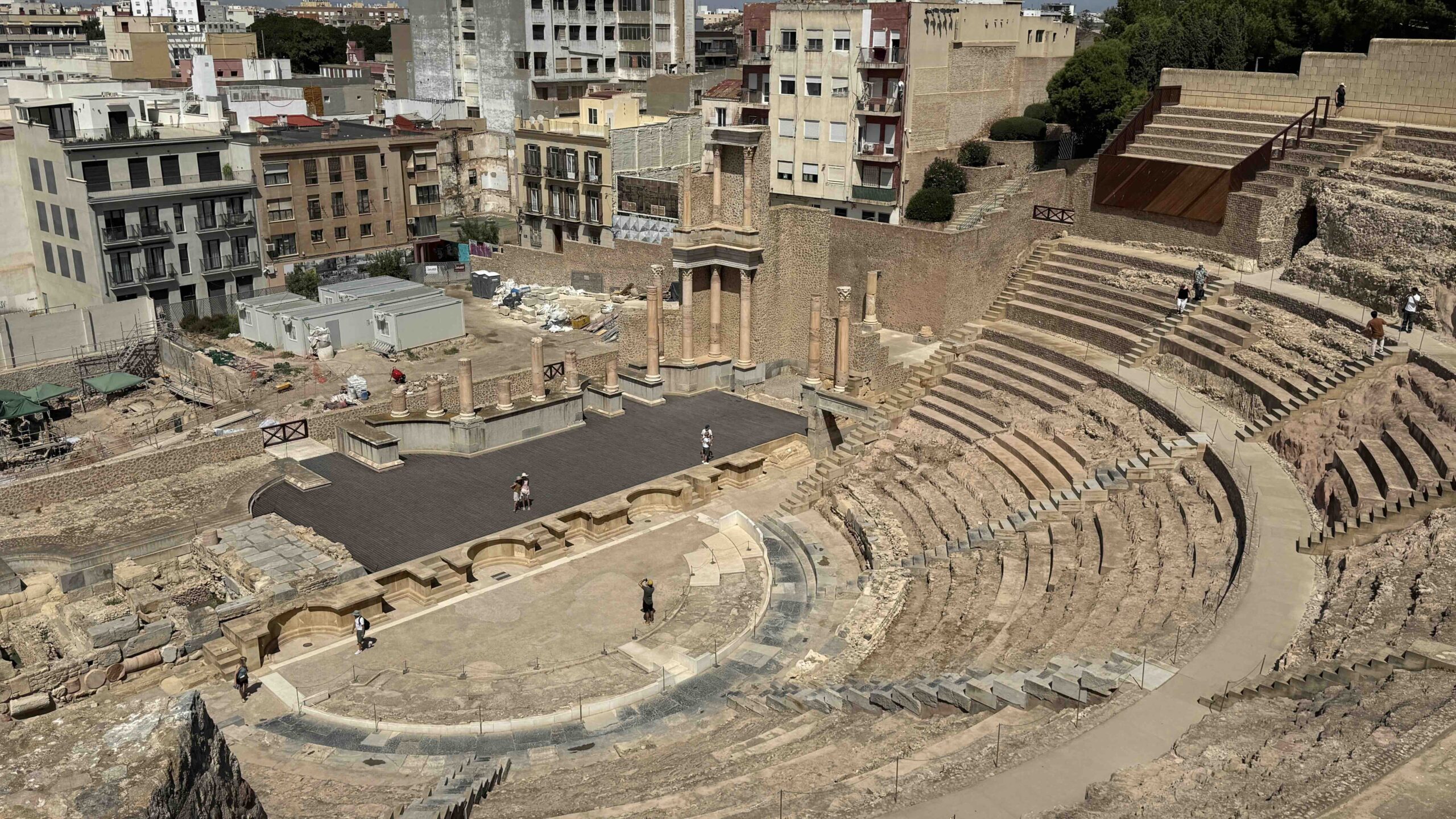
At our anchorage for the coming night in Águilas, we accepted that the afternoon’s waves were still rolling into the bay, making it a bit uncomfortable to moor there; in return, however, we were safe from the wind, which was set to veer north and pick up during the night. This somewhat rocky night also passed, and the next day it was only a five-hour sail to Cartagena Marina, where I’d reserved a berth for two days the day before. We were able to explore Cartagena at a leisurely pace; during the day it was nearly 30°C and sunny. Cartagena was founded by the Romans and, like all Mediterranean cities, has had a turbulent history marked by numerous conquests and a succession of rulers. We were particularly impressed by the amphitheatre, which could seat 5,000 people and was only discovered in the 1980s when a row of houses in the very centre of the city was demolished. The town has lovely shopping streets and well-maintained Gründerzeit buildings, and struck us as clean and safe. I visited the Maritime Museum whilst Andrea went on a bit of a shopping spree.

On the second day, we did some food shopping and were back out at sea again first thing in the morning. I’d timed our departure so well, thanks to the favourable wind, that we made rapid progress under sail, making the most of the current which flows all the way from Gibraltar into the Mediterranean and swirls ever more vigorously at this corner of the mainland. After an uneventful night, we reached the west coast of Formentera at midday.
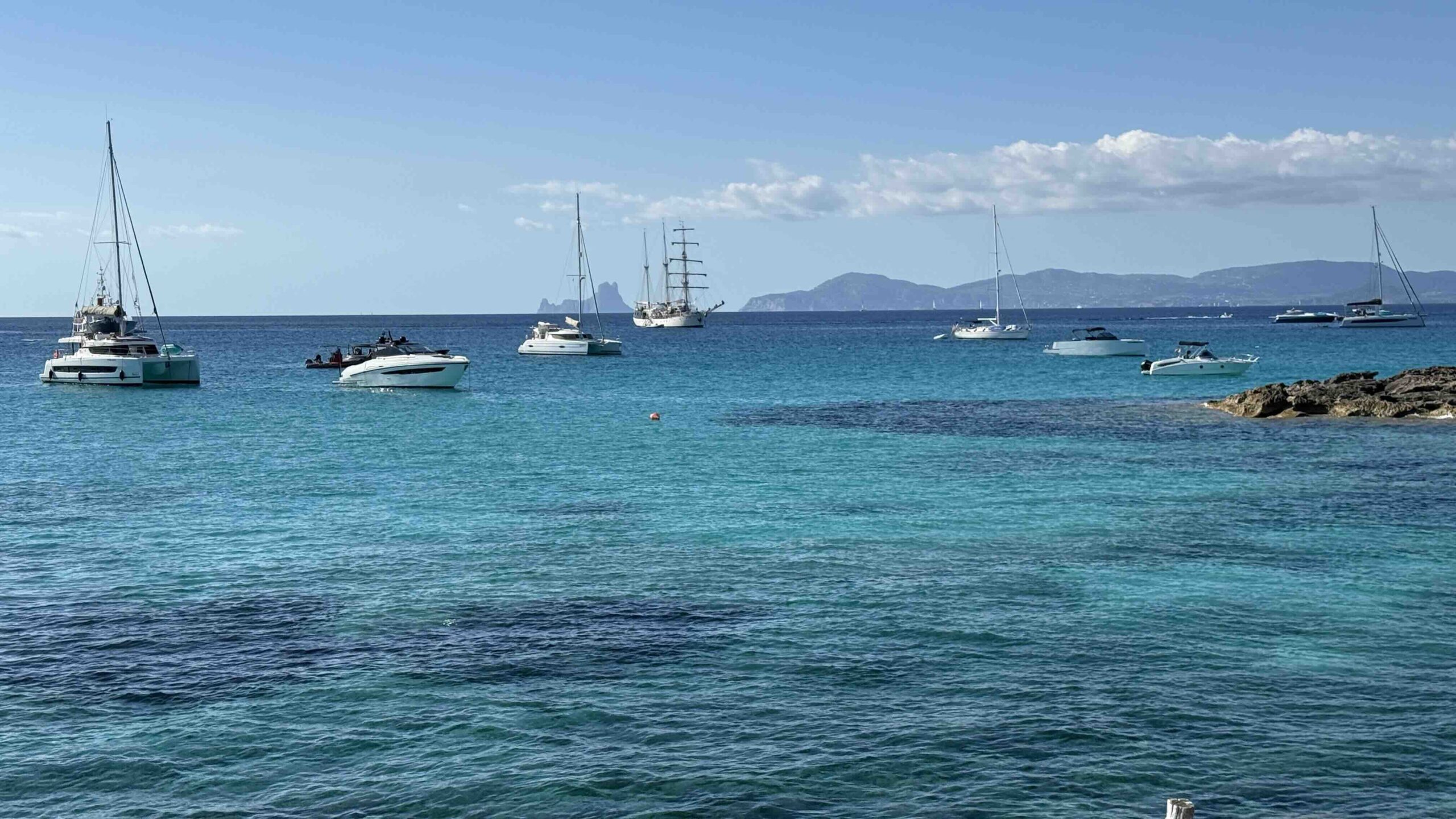
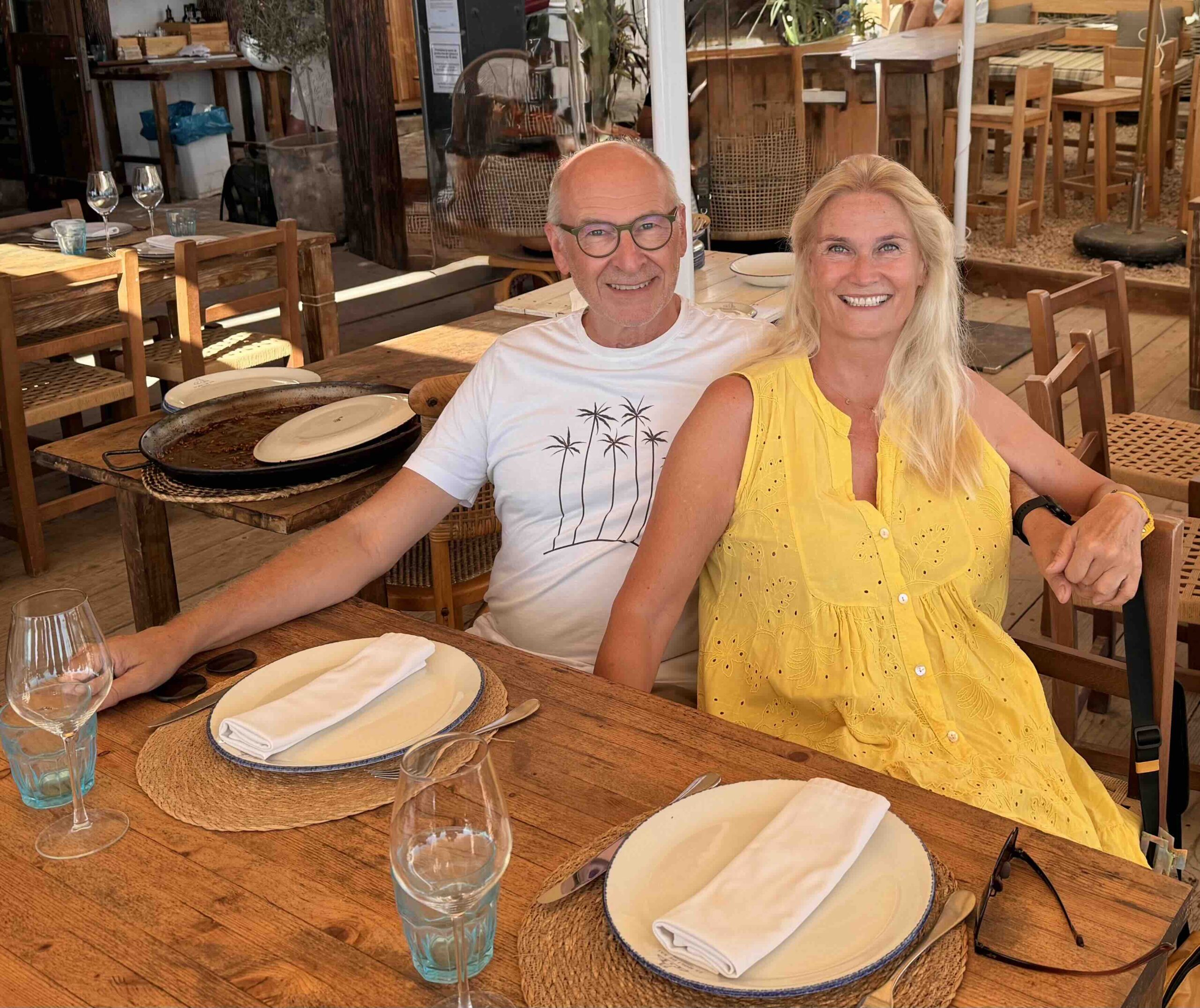
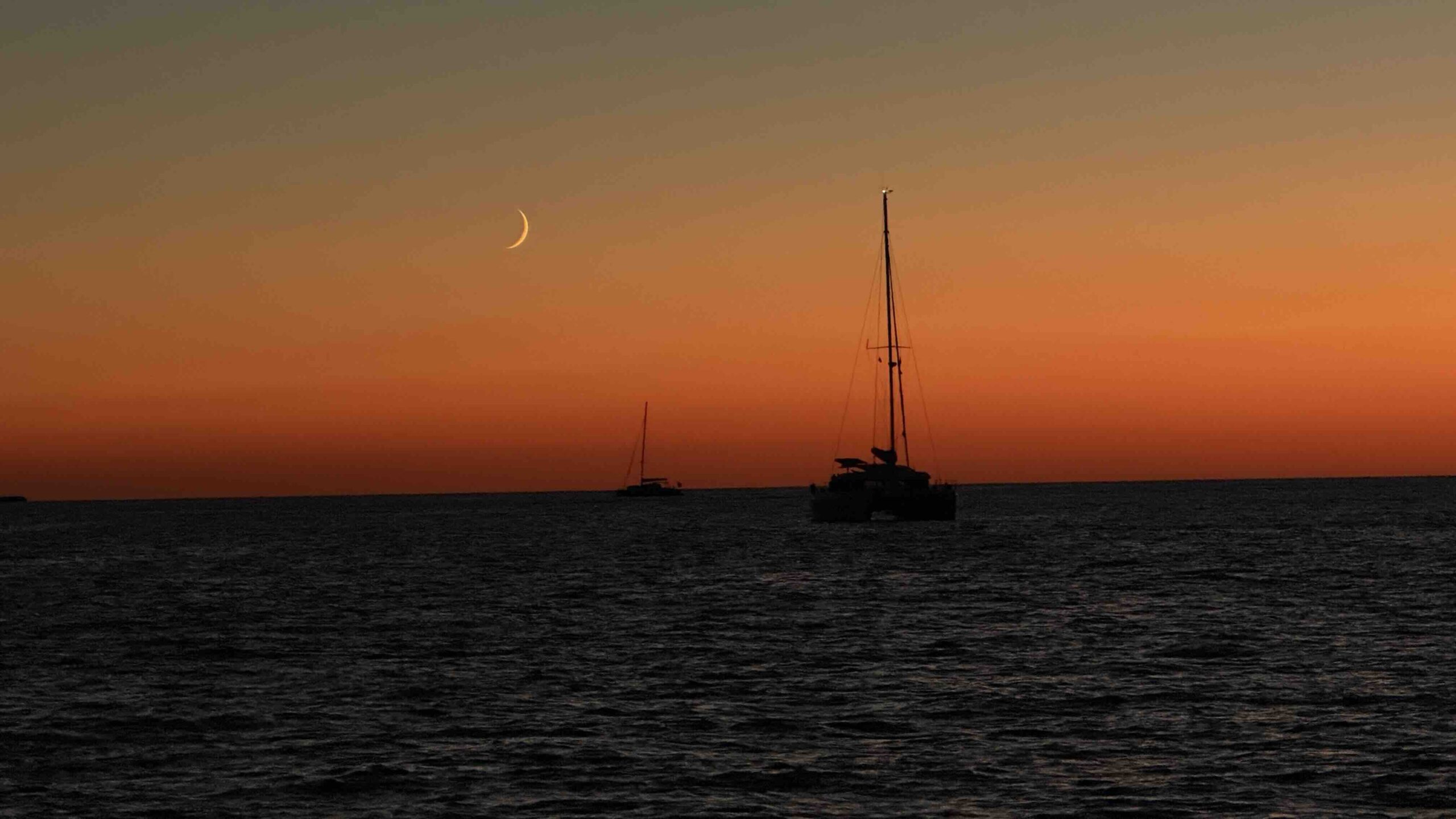
It was off-season, mind you, but you wouldn’t have known it here. The beautiful turquoise water off the white beach is, I believe, teeming with hundreds of boats all year round. In fact, only a few long-term sailors, like us, were moored here. The vast majority of motorboats and mega-yachts are chartered, and that doesn’t come cheap. A day on a 15-metre motorboat costs between €3,000 and €5,000 plus fuel costs. On one company’s website, they estimated the boat’s fuel consumption at 250 litres per hour. So the costs really add up quickly if you fancy a day of luxury. Money seems to play only a minor role here. Once you’re at anchor, you can arrange for a dinghy from one of the numerous restaurants to pick you up and take you to the jetty. That’s exactly what we did, and as we took our seats on the spacious terrace overlooking the bay and glanced at the other guests at their tables, we realised we were bringing down the average age here a bit. So many young people! Do they all have enough money to afford this? Where’s the economic crisis here? The tables were groaning under the weight of seafood, paellas and wine glasses; mellow chill-out music lulled us perfectly as your gaze wandered down the cliff to the turquoise sea, which was packed with boats. Around eight o’clock in the evening, you can experience a truly incredibly intense orange sunset at its very best here.
We shared a fish, each had a starter and a beer, and paid €300. It’s not as if we come here every day.
Schwimmen im Türkis ist nur ganz nahe am Boot empfehlenswert. Rücksichtslose Motorboot Kapitäne rasen mit Riesenwellen im Kielwasser an dir vorbei. Nicht auszudenken, wenn man etwas vom Boot entfernt schwimmen sollte.

For our third night, we headed to the east side of Formentera – which is just 500 metres wide – a two-hour sail away. This was partly because the wind had shifted to the west overnight, and partly because it meant we could save ourselves a few miles on the next leg of our journey.

We estimated that the journey of over 350 nautical miles, which we set out on Monday 15 September, would take three days and two nights. As, as already mentioned, easterly winds are the norm, I was keen to make the most of the brief spell of westerly wind to sail eastwards towards Sardinia. This crossing, too, will surely remain in our memories for a long time as a very positive and exciting experience. The wind was just strong enough to allow us to glide along at six knots under full light-wind sails. Only the tiniest of waves and no current hindered Symi’s progress. During the night, the wind died down completely and we started the engine as planned. As there is absolutely no light pollution here and it was shortly after the new moon, we were treated to a spectacular celestial display of the highest order. The stars sparkled all the way down to the horizon, and even my watch from 4.00 to 8.00 in the morning was a pleasure at 25° with this view. The Milky Way and the stars were reflected on the surface of the sea, so that the entire surroundings and the sky merged into one huge planetarium.
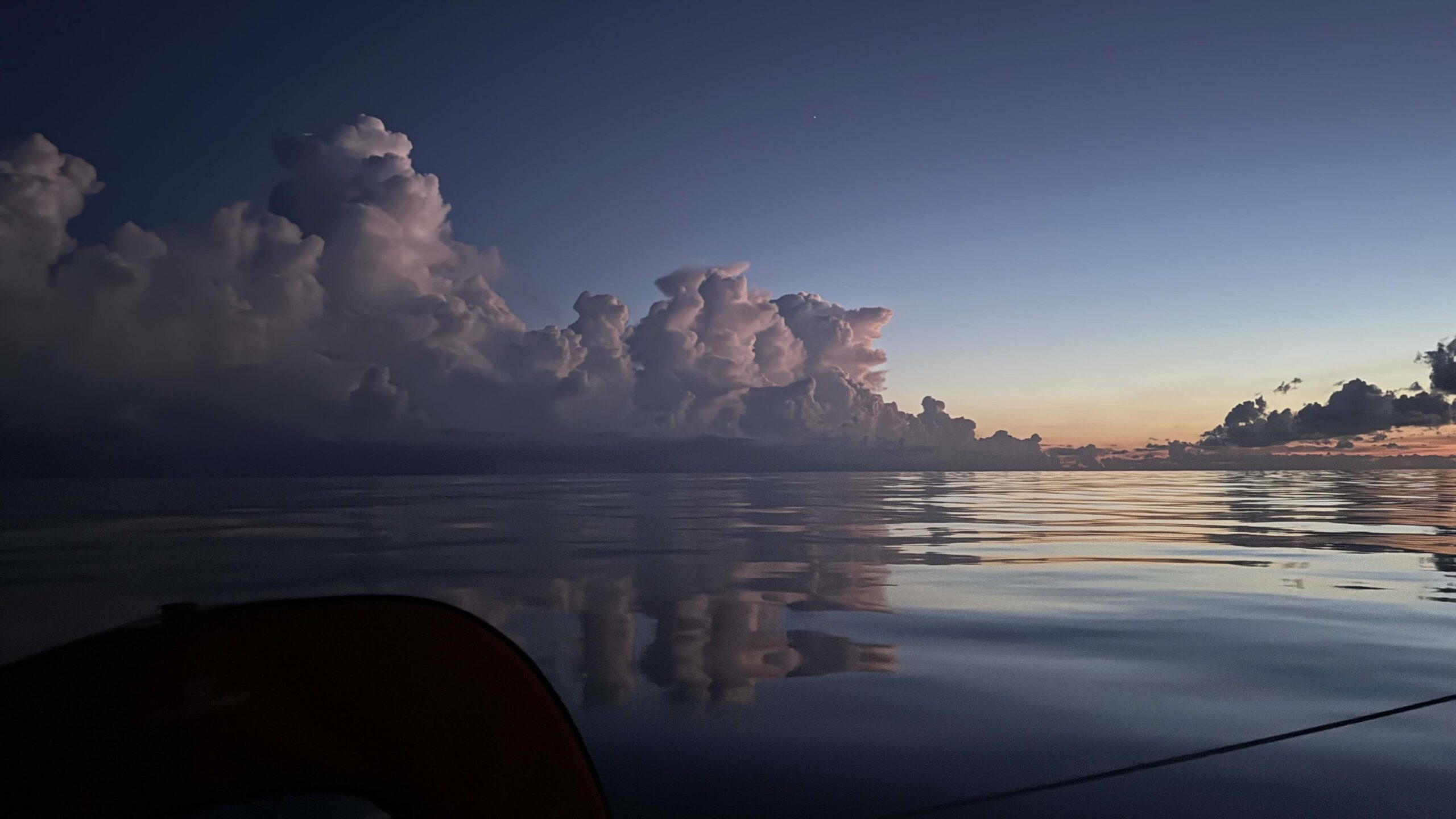
Apart from a frightening thunderstorm front that I came across at sunrise, everything went well.
During the day we were sailing again, and the sea lay before us like a small lake. We hardly came across any other ships here, as the main shipping route through the Mediterranean runs along the North African coast.

In the evening, shortly after sunset, in the last light of day, we sailed into the bay of Porto Pino in Sardinia, dropped anchor and had a good night’s sleep. We had already spent a night at this very spot once before, whilst leaving the Mediterranean in 2023, so we remembered there was an excellent restaurant in the village, which we then visited the following evening.
On Saturday 19 September 26, we went for a short walk to a lake where hundreds of flamingos lived, bought a little more bread and fruit, and then returned to Symi to prepare the boat for tomorrow’s next leg of the journey. We had to transfer 80 litres of diesel from jerrycans into the tank and stow the dinghy and outboard motor away again. And tomorrow at 6.00 am we’ll be setting off again.
255 nautical miles (another three days and two nights) to the Aeolian Islands.

Verfolge uns wieder über unseren „Wo wir sind“ Link und drück uns die Daumen.


Wie immer schicken wir

die besten Grüße an alle


Die Symis

Reading time: 11 min

After six days back on board the Symi and following a variety of intensive cleaning and repair tasks, we and the boat are now ready to set sail.
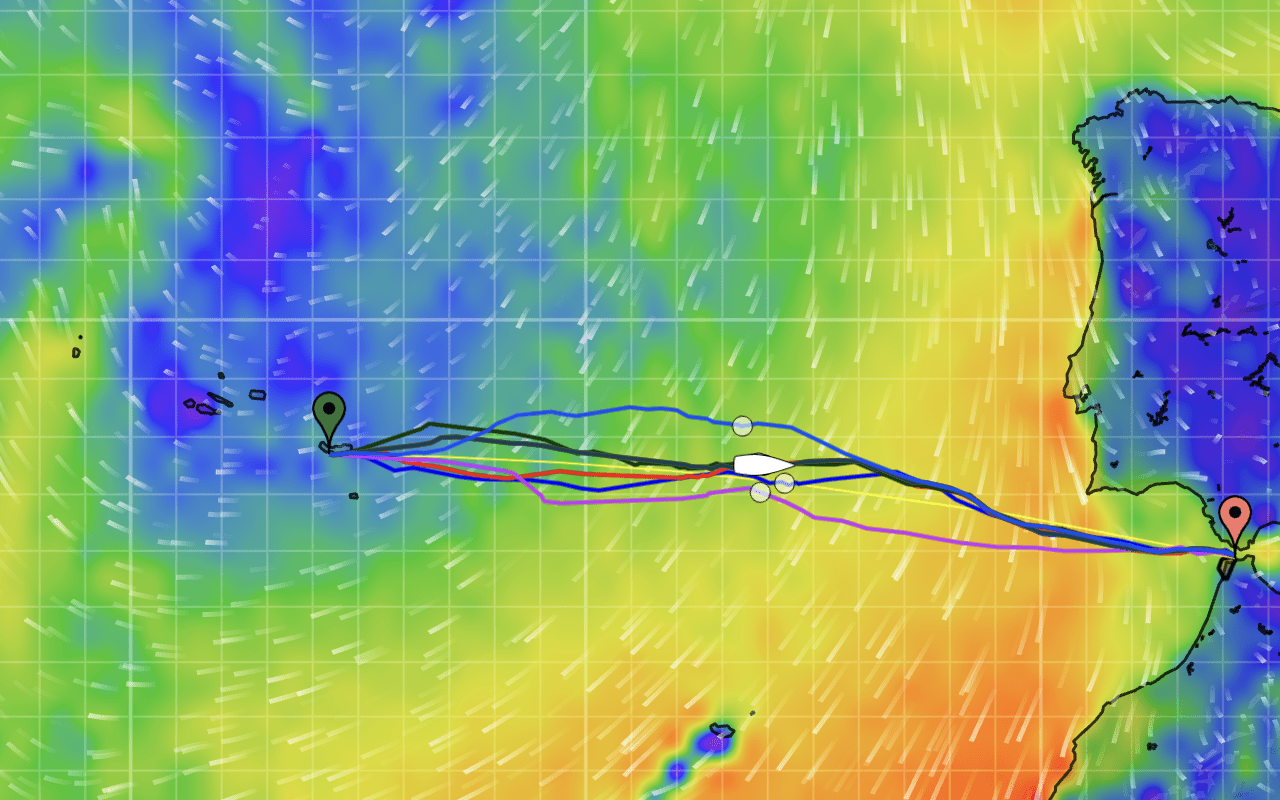
Tomorrow, September 6, 2026, we’ll fill up with 100 liters of duty-free diesel at the British gas station in Gibraltar, filling 5 canisters (at €1.55/liter), and then we’ll round the corner of the Monkey Rock and leave Gibraltar heading east.

You can find details about our crossing to Greece via this link or in the “The 2026 Plan” menu.
As always, you can follow us live in the “Where We Are” menu.

Best regards from aboard
The Symis

Reading time: 1 min
Page 1 of 431234102030...Last »
Falls Du eine Benachrichtigung erhalten willst, wenn ein neuer Blog erscheint, subscribe hier.

sailingsymi.com