Dear friends of SailingSymi,
SYMI and we arrived today, Friday 23 September 2026, following a final three-day trip to the island of Kefalonia in Greece.
To round off this travelogue, let’s go back a few days.
After a short break in Sardinia, we set off at 6.00 am on the penultimate leg of our journey heading east. The departure time was chosen precisely in line with the weather forecast. As mentioned in the previous section, autumn weather in the Mediterranean tends to be rather changeable, and it can happen that unfavourable winds leave you stuck in one place for days on end.
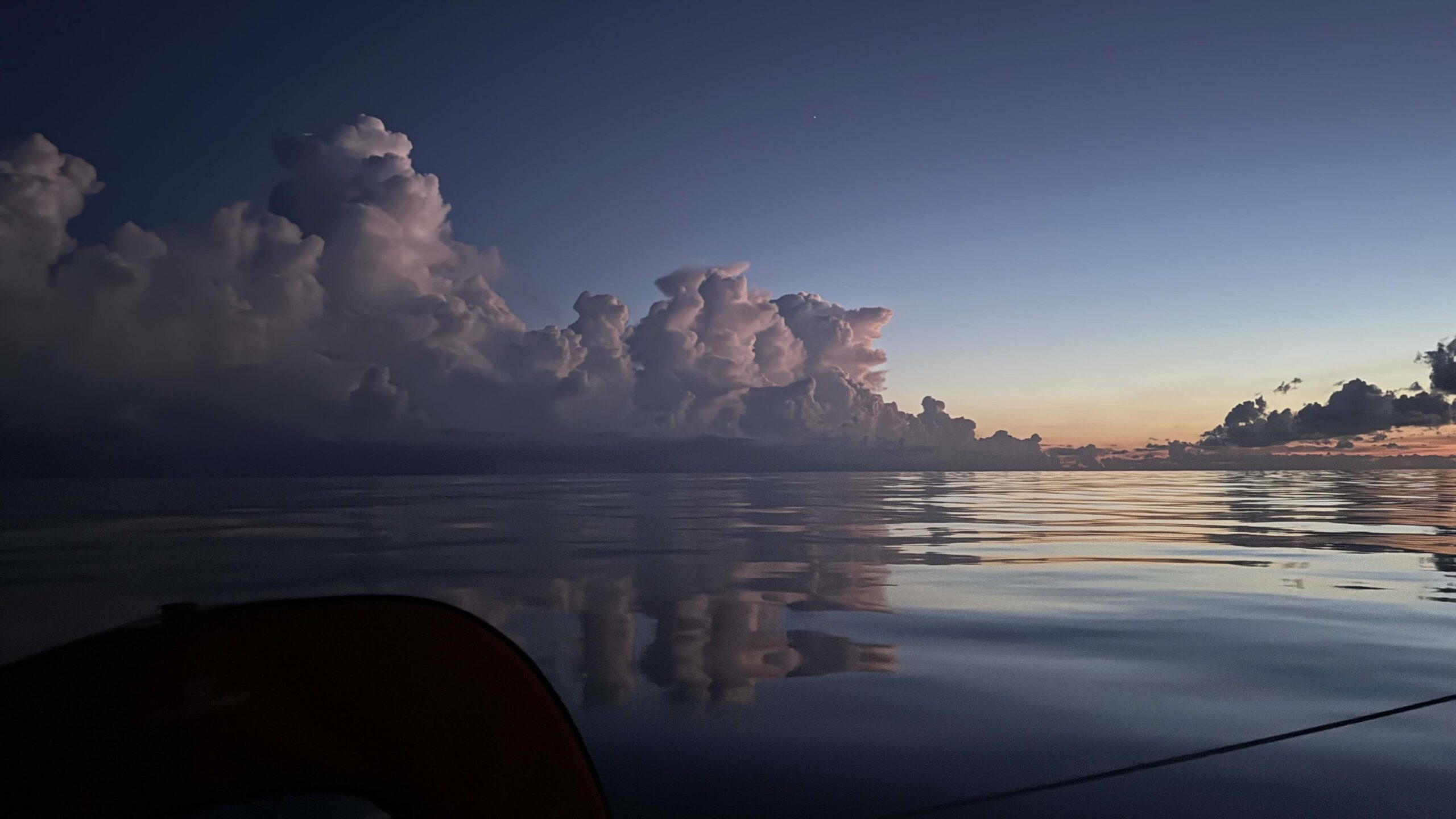
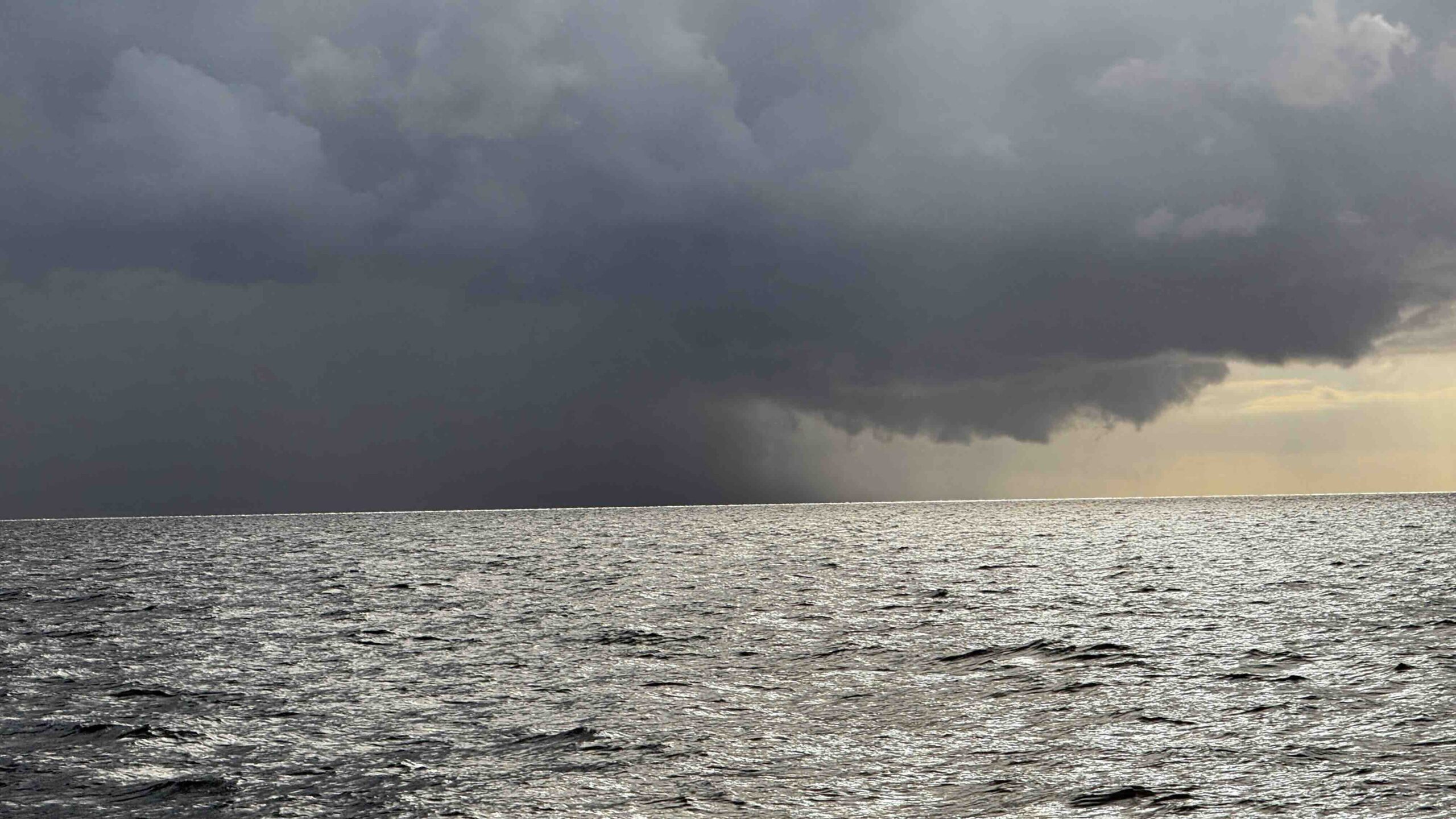
After three hours of smooth sailing towards Sicily, huge black rain clouds rapidly appeared ahead of us, accompanied by fierce flashes of lightning. The wind ahead of us picked up and soon reached 30 knots, prompting me to tack to avoid the direction the storm was heading. This detour cost us a few hours, but we remained safe and dry.
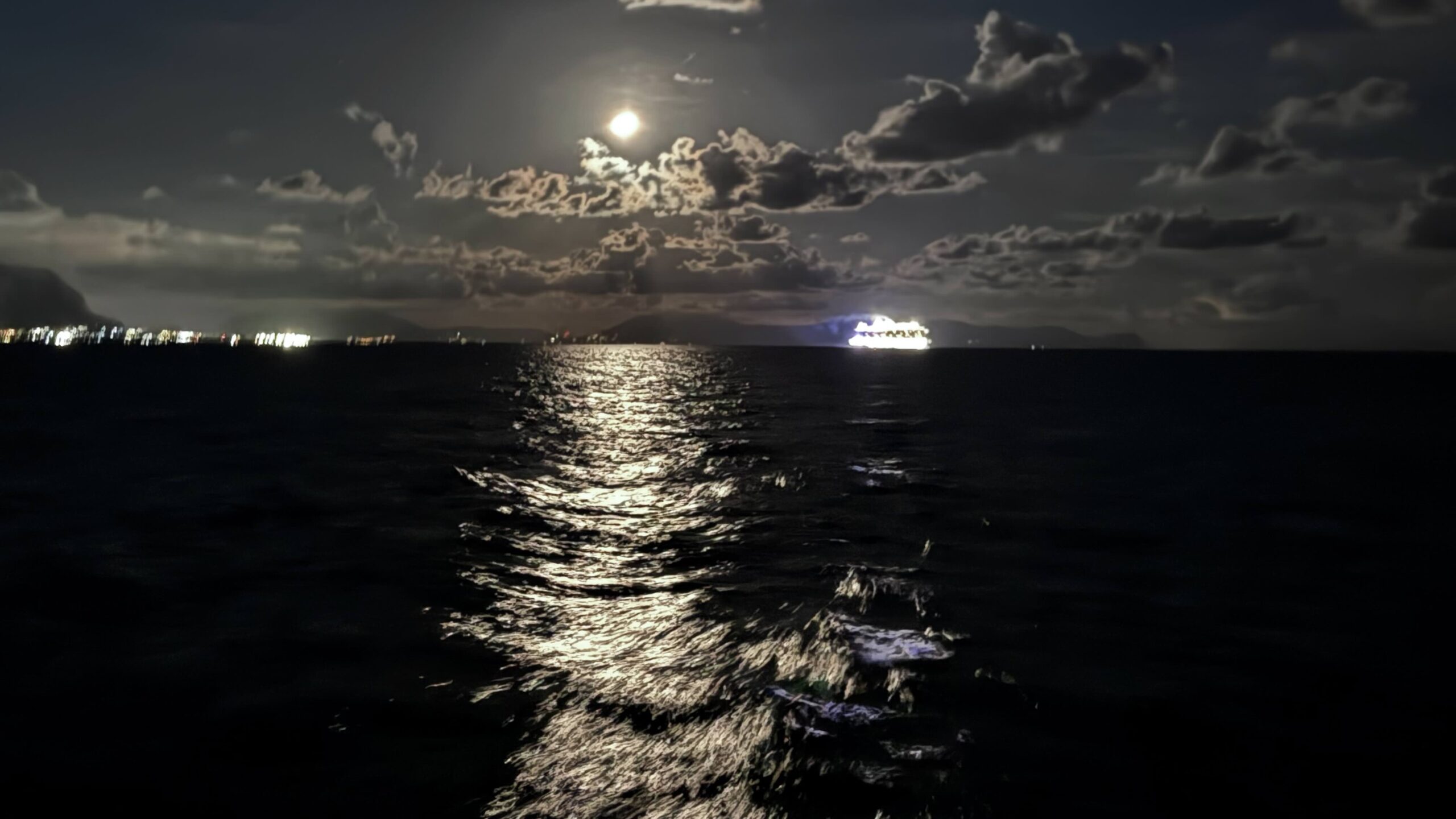
On the morning of the following day, we passed Palermo, a popular port of call for cruise ships. We’d also noticed this on our chart plotter during the night. One monster after another crept out of the harbour, crossed our course and then disappeared in various directions, their deck lights still visible for miles. The north coast of Sicily is about 280 km long and offers only a few safe anchorages, which, in turn, provide real shelter only when the wind is blowing from certain directions.
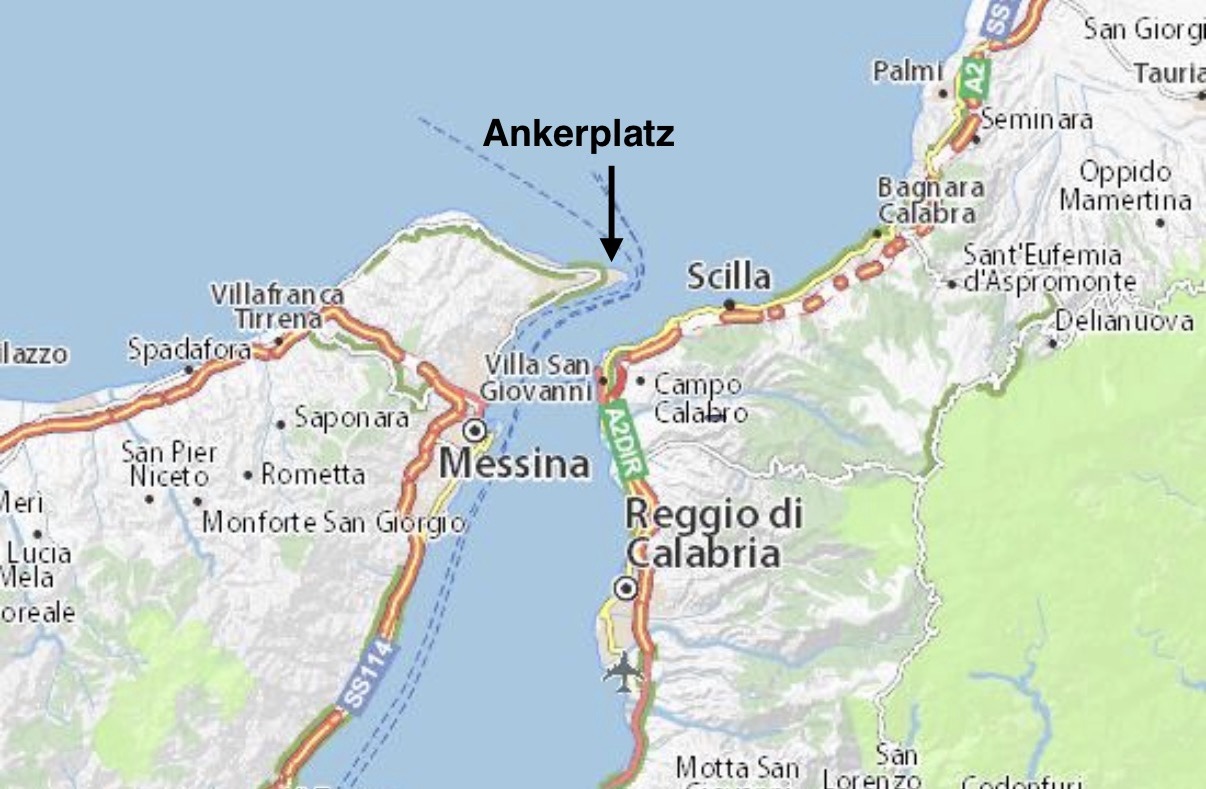
My plan was therefore to reach the north-eastern tip, just before the Strait of Messina, in one go. Here, too, a few squall gusts ‘helped’ us maintain our speed, without ever posing a danger.
I had chosen an anchorage for that night which was only reasonably safe when the wind was from the south. It was exposed, 300 metres off the coast, on a sandbank, between a restricted area to the east – which forms part of the Strait of Messina – and an Italian Navy mine-clearing training area to the west.
My calculations, using the PredictWind programme – which has really proved its worth over the years – paid off completely. It was already starting to get dark, but the most important thing was that the north wind died down and veered south. As a result, apart from two heavy downpours, we lay safely at anchor all night. In unfamiliar waters with currents and uncertain weather conditions, I like to use an anchor alarm.
This is an app installed on the boat’s electronic system which you activate when the anchor is lowered, then select a radius in metres within which the boat is allowed to turn. If it touches the edge of this virtual circle, an alarm sounds.
Wir konnten uns in dieser Nacht gut ausruhen und um 8:00 Uhr ging es wieder Anker auf und hinein in die Straße von Messina, einem Ort, der in der griechischen Mythologie, in der Odyssee Homer’s, durch die Geschichte von Skylla und Charybdis zu den bekanntesten Abenteuern des Odysseus gehört.
Es gibt sogar hier eine lustige Parallele unserer Reise mit Odysseus Weg nach Hause nach Griechenland. Schließlich ist unser Ziel die Insel Kephalonia, die Nachbarinsel von Odysseus Heimat, Ithaka. Und so erzählt es die Geschichte:
After the Trojan War, Odysseus is on his way back to Ithaca with his men. During his long odyssey, he eventually reaches a dangerous strait where Scylla (now a place called Scilla) lurks on one side and Charybdis (Messina) on the other. Scylla is a terrifying sea monster. Homer describes her as a creature with several heads – she lives in a rocky cave and snatches passing sailors with her long necks. Odysseus is unable to prevent Scylla from seizing and devouring six of his men. On the opposite side lies Charybdis, a mighty sea whirlpool that sucks in the water three times a day and spits it out again. A ship that comes too close can be swallowed up, crew and all. Odysseus faces a dilemma as he navigates through the strait: either to be sucked into the whirlpool or to be attacked by the monster. This has given rise to the saying that has survived to this day:
‘Between Scylla and Charybdis’.
It means that one is caught between two dangers and has no truly good solution.
We were in a much better position than Odysseus. I had an up-to-date ocean current forecast, a Starlink satellite connection, a recent weather report, and had already crossed the Strait of Messina twice before with SYMI. So, let’s get on with it. The current sped us up by nearly three knots, and the only hazards were the roll-on/roll-off ferries, which shuttled back and forth between Reggio and Messina like a swarm of wasps and had absolute right of way. After just two hours, we reached Reggio di Calabria and chugged on under engine power until we reached the point where the Ionian Sea opens up to the east. At the southern tip of the Italian ‘boot’, the Calabrian coast offers nothing particularly beautiful. A gas storage facility, a concrete works and a few small villages are all there is. The few palm trees and the lighthouse marked the furthest point of Calabria.
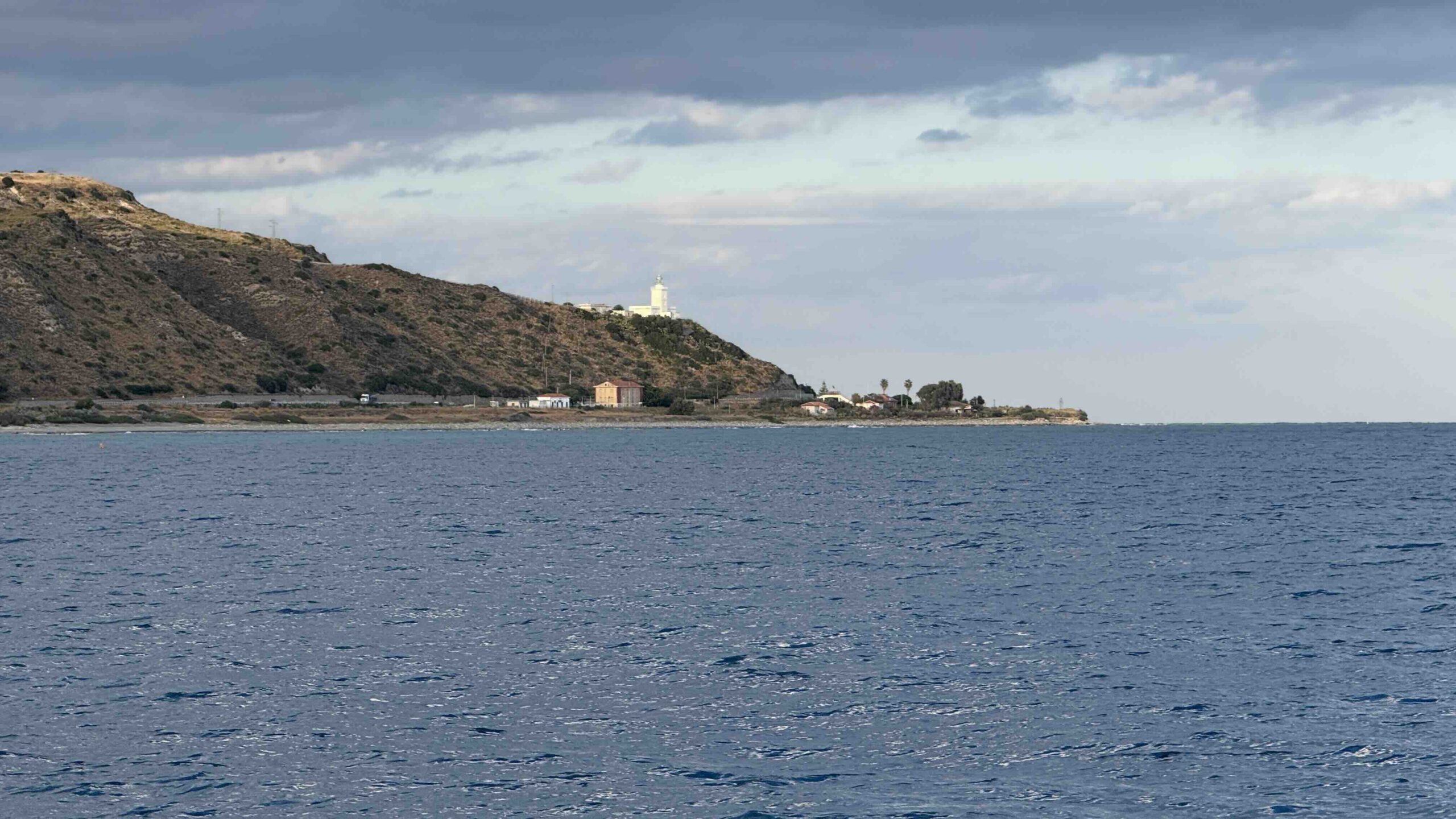
Shortly before sunset, we reached this south-eastern cape and sailed into the night, battling a fairly strong north-westerly current there as well as quite a large swell, which had been caused by the strong wind the previous day in the Ionian Sea.
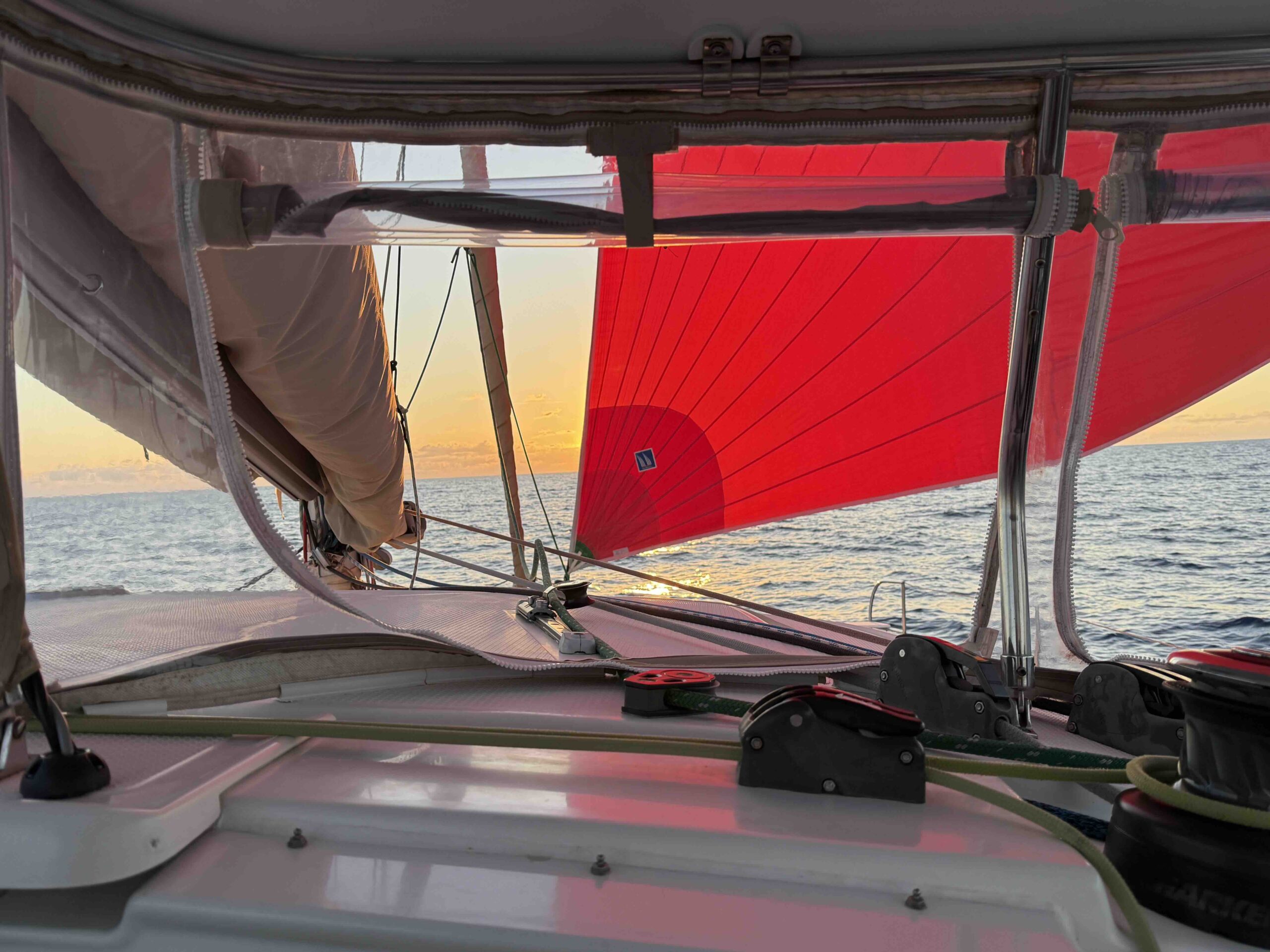
Yesterday’s day’s sailing was phenomenal. Every sailor will agree with me that there is hardly anything finer than sailing down the waves at up to nine knots on a half-wind course (with the wind coming at 90° to the boat) at 15–18 knots. Marvellous. The final night-time sail of this great voyage was illuminated by an almost full moon and was wonderfully calm.
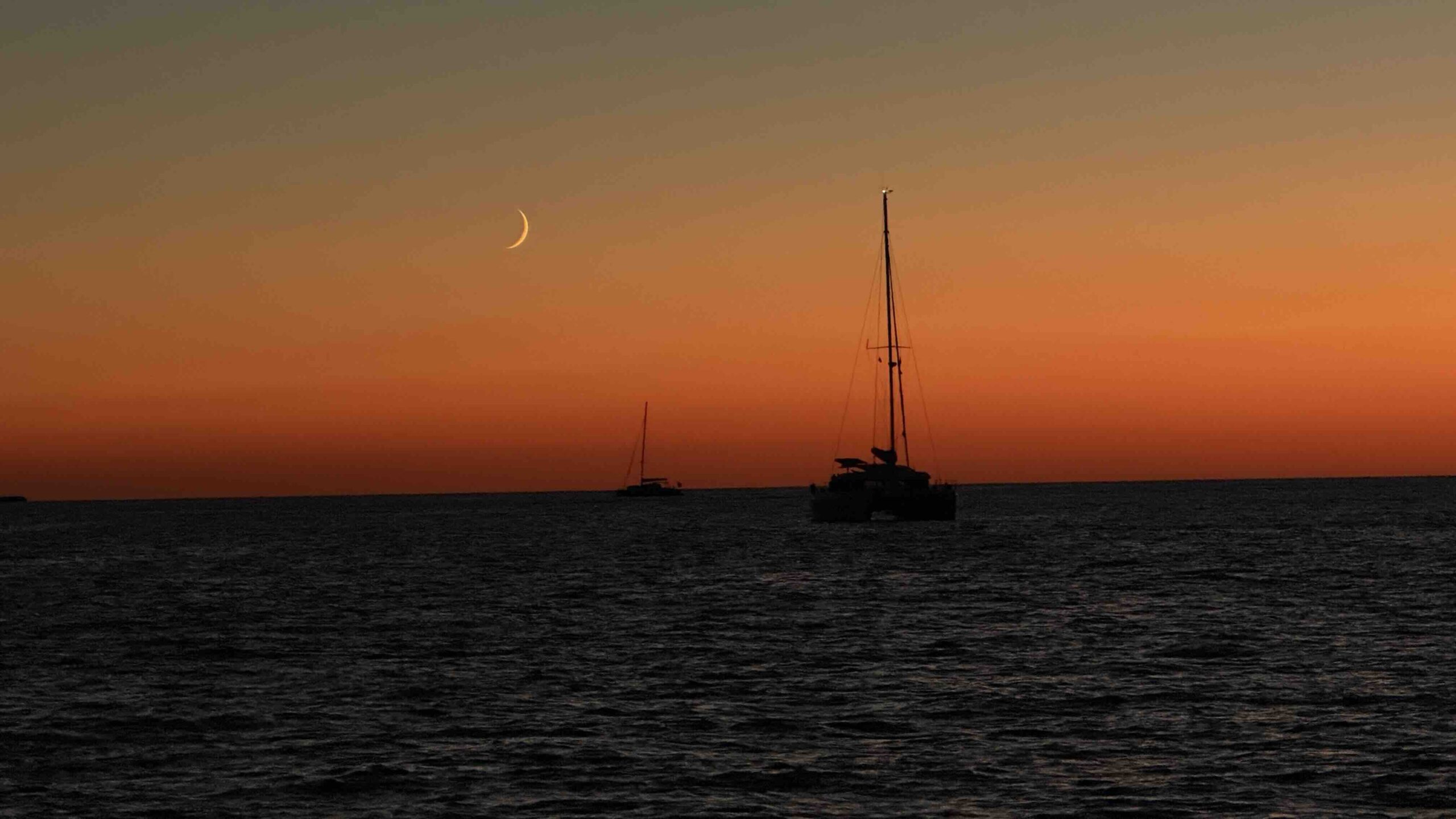
I took over from Andrea again at 4.00 am for my watch. Then, around 6.00 am, the outlines of the islands of Zakynthos and Kefalonia appeared on the horizon beneath the orange sunrise.
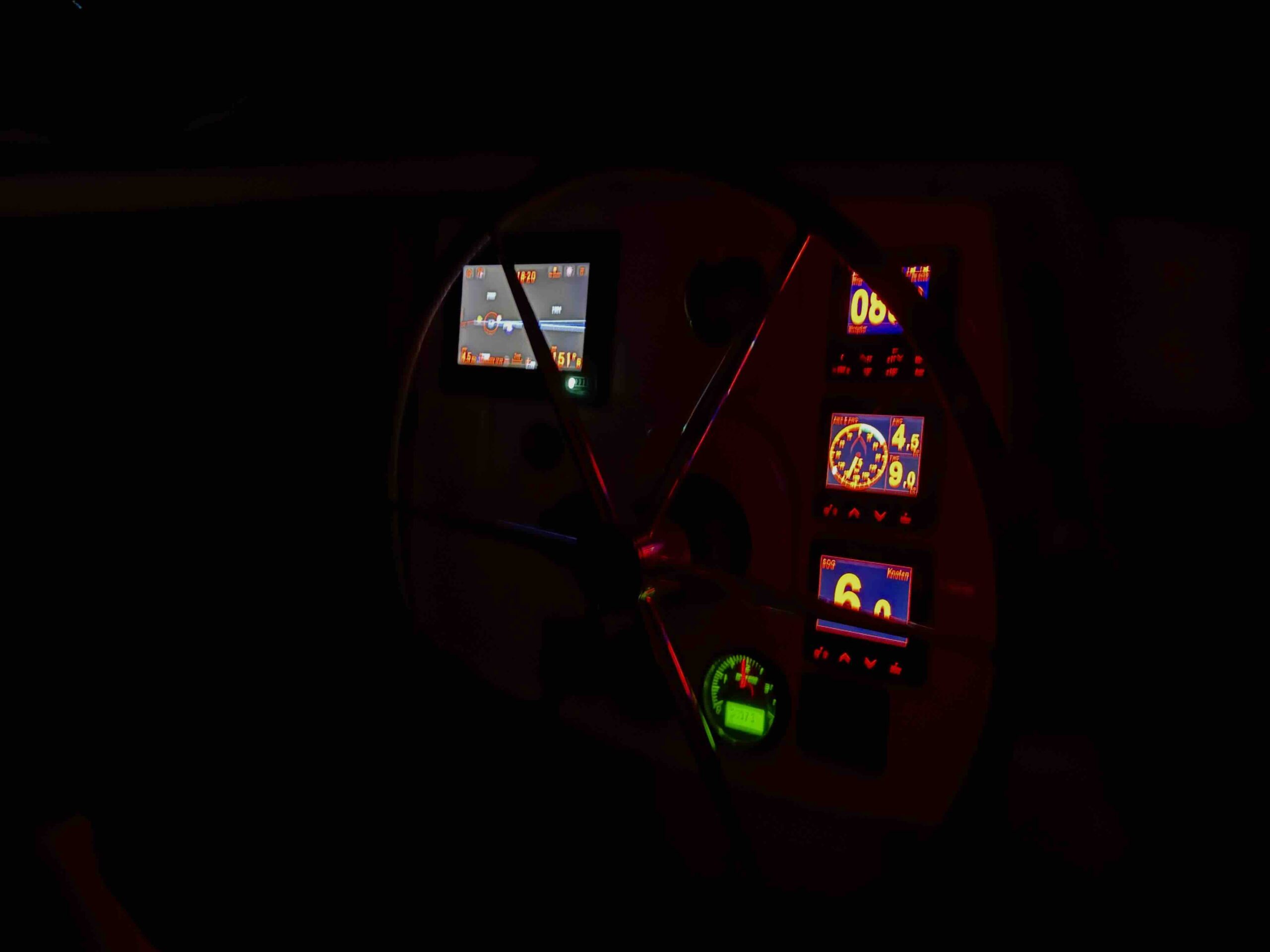
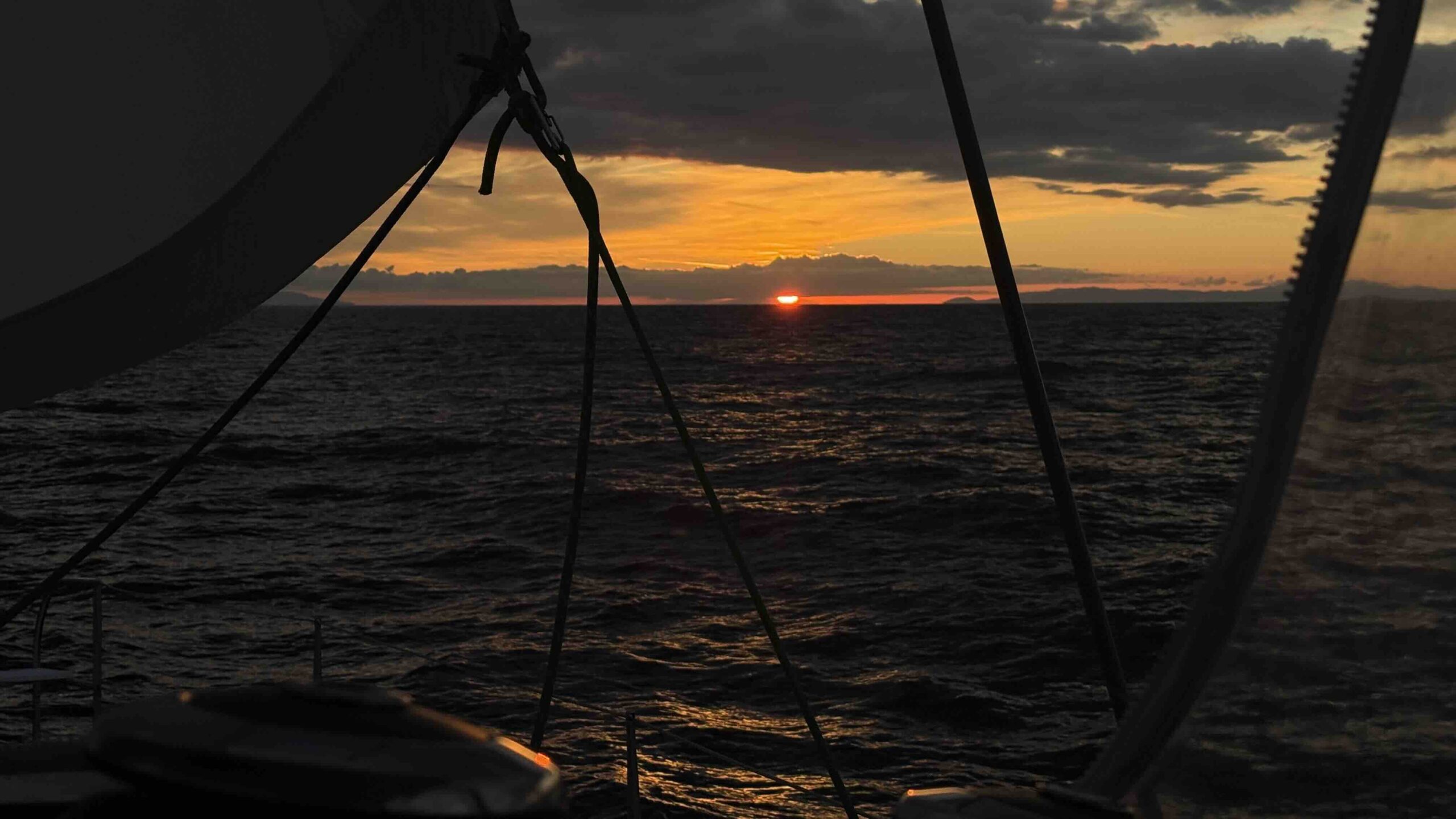
Feeling both happy and a little melancholic, I gazed at the rising sun. Was it all over now? Had my big project – one of my lifelong dreams ever since I was a child, to travel far and wide in my own boat – really come to an end? For us, time probably didn’t fly by quite as quickly as it did for you. Every day we got to experience something new, explore unfamiliar areas, meet new people and make friends. It was full of variety – sometimes very tiring, and at other times absolutely stunning. I’m so glad I made films of our adventures. They are living memories and will remain a record of our journey.
On the nautical chart, it was definitely a done deal. The circle is complete; the routes have come together again at their points. We’ve been on the move for three years (me, with my shoulder, ‘almost’ unscathed). Now that we’re back in Pavlos Kostekis’s adopted home, the travelling is certainly not over. As my dear sailing friend Reinhold once said: ‘The Caribbean was good and the Bahamas were brilliant, but Greece is the best.’ That’s exactly the plan. I’d love to carry on sailing around here.
Vom Punkt des Sonnenaufgangs waren es nur knapp 20 Seemeilen bis zum großen Ziel. Was war dieser Katzensprung schon im Vergleich zu den seit Beginn der Reise zurückgelegten Meilen:
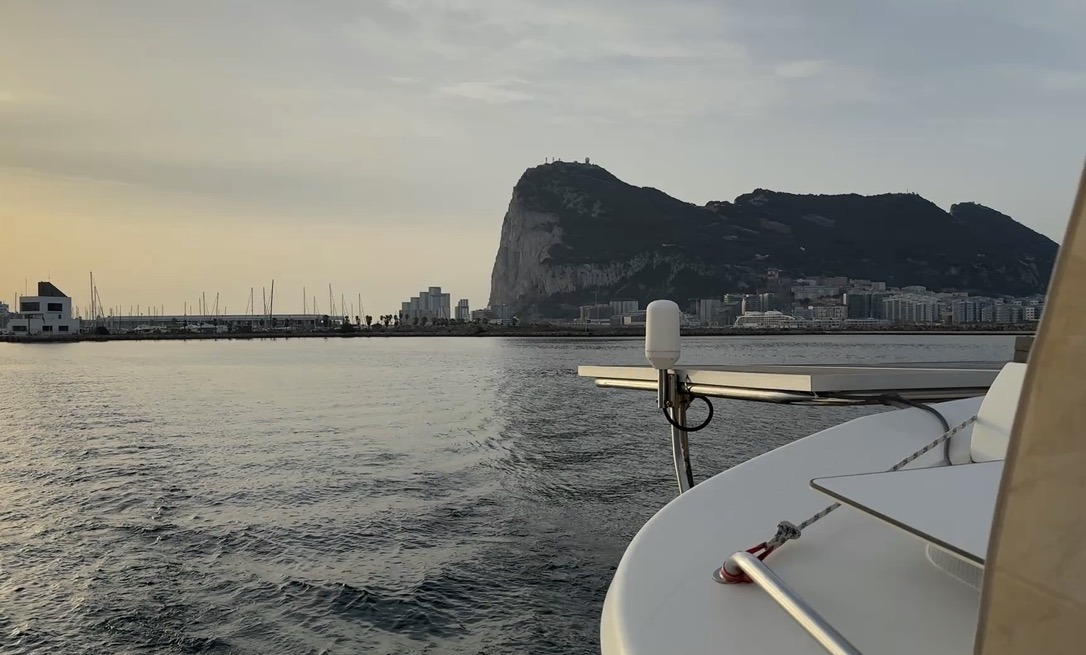
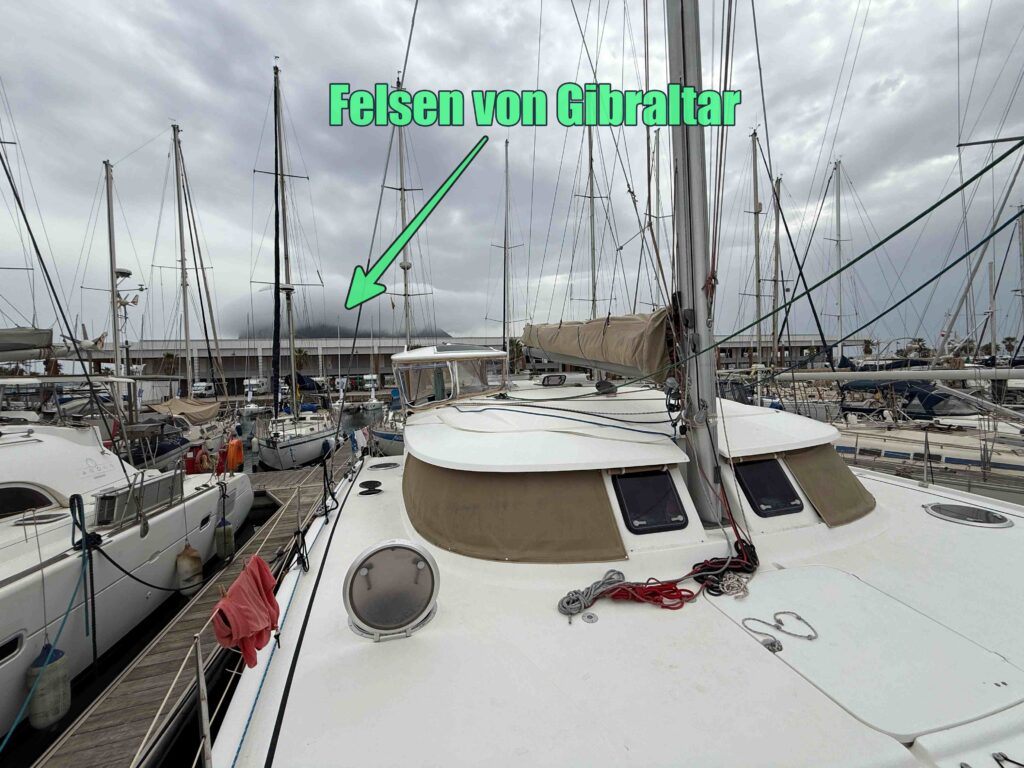
Von Gibraltar legten wir mit Symi in drei Wochen bis hierher alleine 1352sm (2500km) und seit Juni 2023 ließen wir mit der gesamten Atlantikroute 15.952 Seemeilen (29.511km) im Kielwasser zurück. Dabei haben wir uns und hat sich das Boot wirklich tapfer geschlagen.
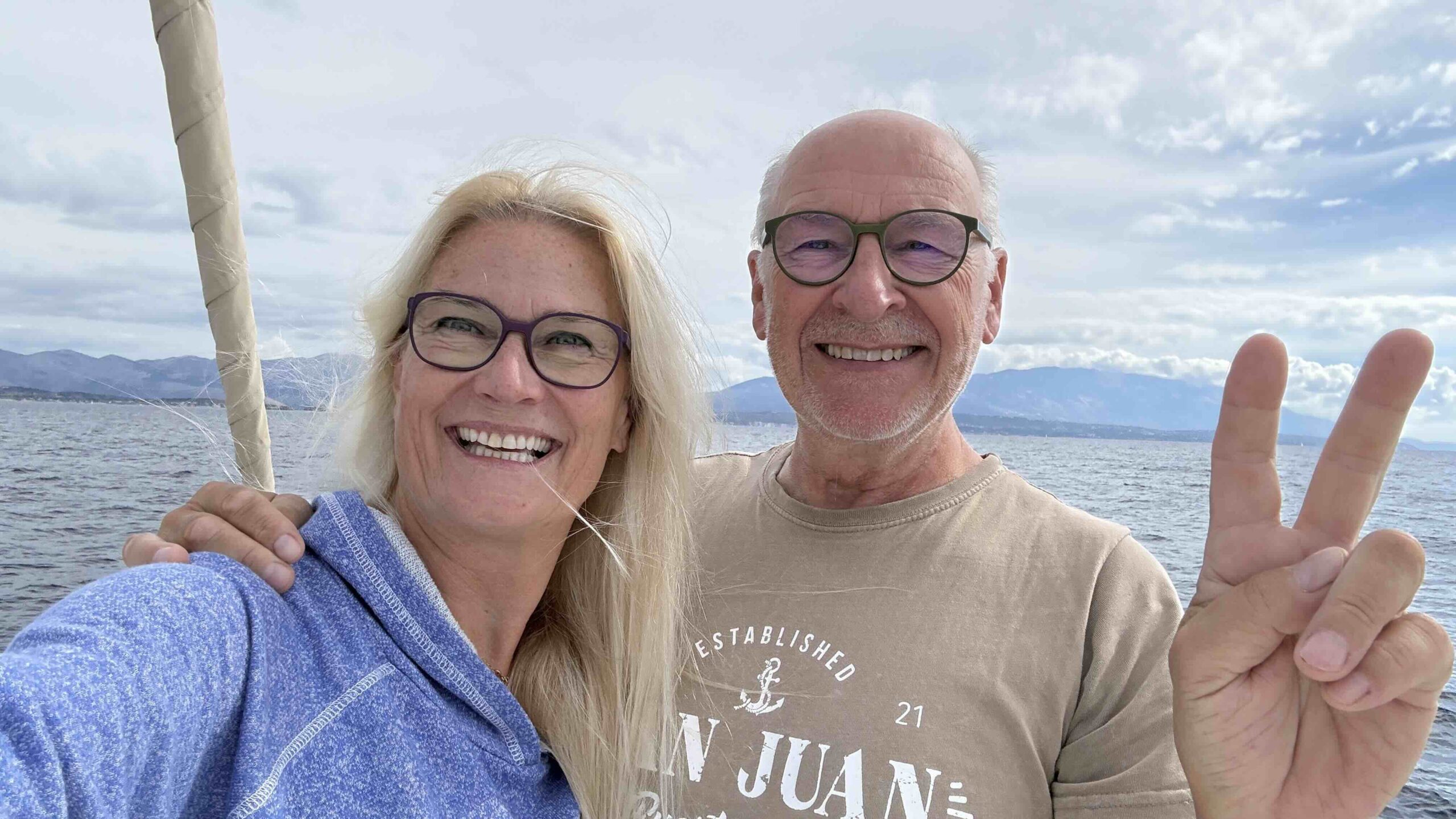
So what shall we do now?
We’re calling it a holiday in Greece. We’ll be chilling out here in the Ionian Islands for a good two weeks, with no stress. On 15 October 26, we’ve got our crane appointment at the Mesolonghi marina, and then it’s time for winter storage, the winter closure and our flight home to Vienna.
Best wishes once again from on board
Andrea & Pauli (the Symis)